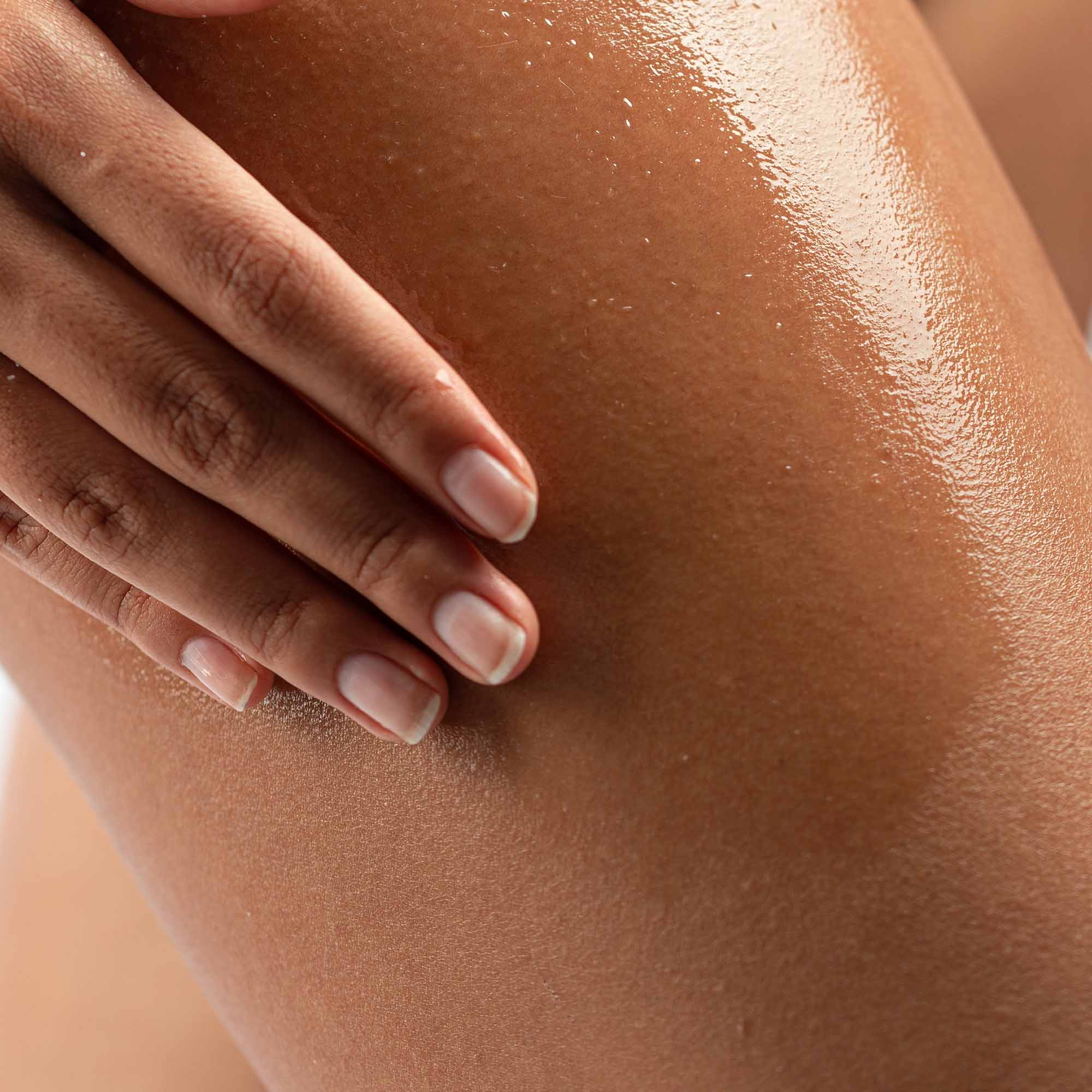
For dehydrated, tight, dull + thirsty skin. Without any greasiness.
Hyaluronic acid is a powerful humectant that helps skin attract and retain water, leaving it hydrated, smoother and visibly plumper. It works for dry, oily and combination skin alike because hydration is about water — not oil.
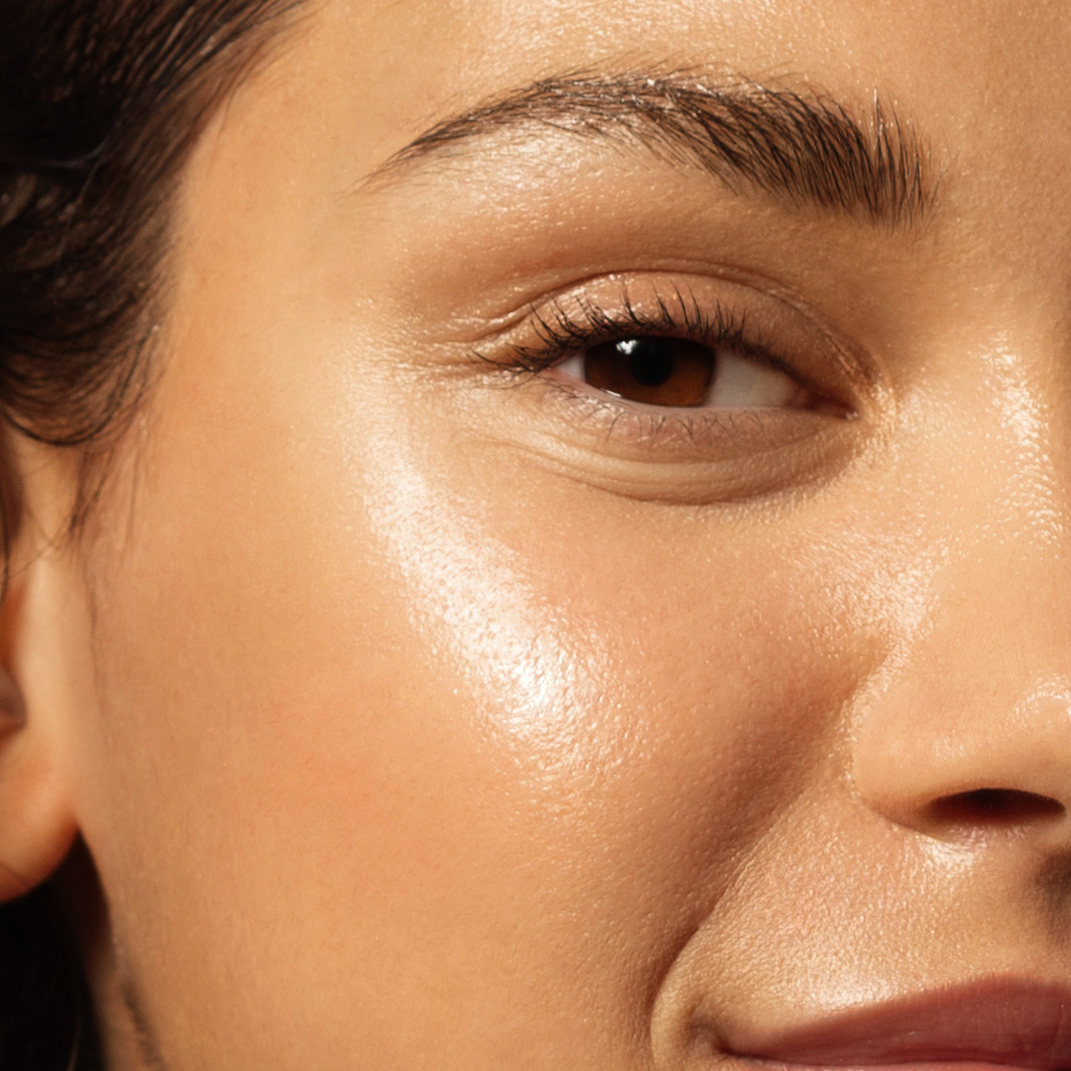
Benefits
- Provides lightweight hydration
- Helps dehydrated skin hold onto water
- Plumps the look of fine dehydration lines
- Leaves skin smoother + softer
- Helps reduce tight, thirsty feeling
- Hydrates without adding oil or greasiness
Get the benefits of Hyaluronic Acid
-
 SOOPERSMOOTH Body SerumSOOPERSMOOTH Body Serum Smoothens Bumps, Fades Spots & Pigmentation, Brightens, Hydrates
- Regular price
-
₹1,450 - Regular price
-
- Sale price
-
₹1,450
BODY AWARD WINNERQuick view
-
 SOOPERBOOST Face SerumSOOPERBOOST Face Serum Boosts Glow, Clears Pigmentation, Evens Texture, Firms, Hydrates
- Regular price
-
₹1,650 - Regular price
-
- Sale price
-
₹1,650
FACEQuick view
-
 SOOPER DUO: face + body serum setSOOPER DUO: face + body serum set Smooth, glowing, even-toned skin from head to toe.
- Regular price
-
₹2,700 - Regular price
-
₹3,100 - Sale price
-
₹2,700
FACE + BODY SETQuick view


Hydration, Explained
Despite the name, hyaluronic acid is not an exfoliating acid like glycolic or lactic acid.
It is a naturally occurring molecule found throughout the body, including in the skin, where it plays an important role in hydration and the extracellular matrix.
In skincare, hyaluronic acid acts primarily as a humectant — an ingredient that binds water.
By helping increase water at and within the upper layers of the skin, it can make skin feel softer, smoother and more comfortable and create a temporarily plumper appearance.
This is why hyaluronic acid is particularly useful when skin feels:
- tight
- dehydrated
- rough
- less plump
- dull
- uncomfortable after cleansing
It adds hydration without needing to add heavy oils, making it useful across skin types.
They sound similar, but they are not the same thing.
Dry skin is a skin type.
It generally produces less sebum, or oil, than the skin needs.
Dehydrated skin is a skin condition.
It lacks water.
That means even oily skin can be dehydrated.
You might have dehydrated skin if it:
- feels tight after cleansing
- looks dull despite being oily
- develops fine, crepey dehydration lines
- feels uncomfortable in air conditioning
- gets oily but still somehow feels thirsty
- suddenly feels rougher than usual
Hyaluronic acid addresses the water side of that equation.
It does not replace the lipids that genuinely dry skin may need, which is why very dry skin may still benefit from a moisturiser containing emollient or occlusive ingredients alongside hyaluronic acid.
Understanding whether your skin needs more water, more lipids or both is far more useful than simply labelling everything “dry skin”.
Absolutely.
Oil and hydration are two different things.
Sebum is oil produced by the sebaceous glands. Hydration refers to the amount of water available within the skin.
So your skin can be:
oily + well hydrated
or
oily + dehydrated
at the same time.
Hyaluronic acid provides water-binding hydration without inherently adding oil, which makes it particularly useful for oily or combination skin that dislikes rich creams.
The important distinction is the finished formula.
Hyaluronic acid itself is not greasy, but a heavy cream containing hyaluronic acid may still feel heavy because of the other ingredients around it.
For hot and humid conditions, a lightweight serum can therefore be an easy way to add hydration without adding another thick layer.
Indian skin is not one single skin type, and there is nothing about hyaluronic acid that only works on Indian skin.
What matters is the environment and the concerns the skin is dealing with.
Across India, skin can move between heat, humidity, strong sun, air conditioning, pollution and seasonal dryness — sometimes within the same day.
This can create an annoying combination:
skin that feels oily on the surface but dehydrated underneath.
Heavy hydration is not always comfortable in those conditions.
Hyaluronic acid is useful because it can provide lightweight water-based hydration without requiring a greasy finish.
Hydration is also particularly important when a routine contains active ingredients such as Vitamin C, niacinamide, glycolic acid or lactic acid.
The goal is not simply “more moisture”.
It is keeping skin comfortable and hydrated while the rest of your routine targets pigmentation, texture, bumps or visible signs of ageing.
If you look at a skincare ingredient list, you may see Sodium Hyaluronate rather than “Hyaluronic Acid”.
They are closely related.
Sodium hyaluronate is the sodium salt of hyaluronic acid. It is widely used in cosmetic formulas because it is water-soluble, stable and highly effective as a humectant.
Boofootel uses Sodium Hyaluronate in both Sooperboost and Soopersmooth.
You may also encounter other HA-related ingredients such as:
- Hydrolyzed Hyaluronic Acid
- Sodium Acetylated Hyaluronate
- Hydrolyzed Sodium Hyaluronate
- crosslinked forms of hyaluronic acid
They can differ in molecular size and cosmetic behaviour.
For consumers, however, the most important point is this:
Sodium hyaluronate is not an inferior “fake” version of hyaluronic acid.
It belongs to the same family of water-binding skincare ingredients and is commonly used specifically because it formulates well in hydrating products.
Yes.
Hyaluronic acid molecules come in different sizes, usually described by their molecular weight.
That affects how they behave on the skin.
Higher molecular weight HA. Tends to remain closer to the surface, where it can help form a hydrating film and reduce the feeling of dryness.
Lower molecular weight HA. Smaller molecules may penetrate farther through the upper layers of the skin.
This is why you sometimes see skincare products marketed as “multi-molecular” or “multi-weight” hyaluronic acid.
But more molecular weights are not automatically better.
The final formulation, concentration and combination of humectants matter too.
And claims such as “deeply penetrates the skin” should be treated carefully — topical hyaluronic acid is still very different from hyaluronic acid injected into the dermis as a filler.
A serum hydrates.
It is not a topical dermal filler.
Not necessarily.
You will often hear the rule:
“Always apply hyaluronic acid to damp skin.”
Applying it to slightly damp skin can be a perfectly good way to use a hydrating serum and may make the product spread comfortably.
But hyaluronic acid does not suddenly stop working if your face is dry.
The complete formula already contains water, and products should ultimately be used according to their directions.
A more useful rule is:
Give hyaluronic acid water — then help your skin hold onto it.
If your skin is dry, the weather is very dry or you spend hours in heated or air-conditioned rooms, following a hyaluronic-acid serum with moisturiser can help reduce water loss.
If your skin is oily and the climate is humid, a lightweight hydrating formula may already feel sufficient.
Skincare does not need rigid internet rules.
It needs to work for your skin and your environment.
Hyaluronic acid does not inherently “suck the water out of your skin”.
That popular explanation is an oversimplification of how humectants work.
Hyaluronic acid binds water within a cosmetic formula and at the skin surface. Whether your skin ultimately feels hydrated depends on the whole formulation, your skin barrier and the environment around you.
However, a humectant-only routine may not feel sufficient for very dry skin, particularly in low-humidity conditions.
If your skin feels tighter after using a hyaluronic-acid product:
- look at the complete formulation
- use an appropriate amount
- consider following with moisturiser
- avoid over-cleansing
- check whether other actives in your routine are causing dryness
The answer is usually not “hyaluronic acid stole all my water”.
Hydration is a whole-routine issue.
They do different jobs.
Hyaluronic acid is primarily a humectant.
It helps attract and bind water.
A moisturiser is a complete product that may contain humectants, emollients and occlusives to hydrate, soften the skin and slow water loss.
So a hyaluronic-acid serum does not automatically replace moisturiser for everyone.
If you have dry, compromised or tight skin, layering moisturiser over your serum may leave your skin more comfortable.
If you have oily or combination skin in hot, humid weather, you may prefer fewer layers depending on the complete formula and how your skin feels.
The best hydration routine is not the one with the most products.
It is the one that leaves your skin comfortable without heaviness.
Definitely.
Body skin becomes dehydrated too.
Showering, hot water, air conditioning, weather changes, sun exposure and exfoliating products can all leave body skin feeling tight or rough.
Hyaluronic acid can help provide lightweight hydration on areas such as the:
- arms
- legs
- elbows
- knees
- neck
- chest
It is particularly useful in a body formula containing exfoliating actives.
Ingredients such as glycolic acid and lactic acid tackle rough surface texture and build-up, while hyaluronic acid helps provide hydration alongside them.
That gives you a more balanced approach to bumpy, rough body skin:
exfoliate what needs exfoliating + hydrate what needs hydrating.
And without having to cover yourself in a heavy body cream.
Almost all of them.
That is one of hyaluronic acid's greatest advantages.
Hyaluronic Acid + Vitamin C. Vitamin C targets pigmentation, dullness and oxidative stress while hyaluronic acid provides hydration. An easy combination for daytime skincare.
Hyaluronic Acid + Niacinamide. Both are useful for dehydrated skin. Hyaluronic acid binds water while niacinamide supports the skin barrier and helps reduce water loss.
Hyaluronic Acid + Peptides. A particularly useful combination when dehydration makes fine lines look more noticeable. Hyaluronic acid plumps through hydration while peptides support firmer-looking skin over time.
Hyaluronic Acid + Glycolic Acid. Glycolic acid exfoliates rough surface skin while hyaluronic acid helps provide hydration alongside an active routine.
Hyaluronic Acid + Lactic Acid. Lactic acid itself has humectant properties as well as exfoliating effects, making this a useful combination for dry, rough or bumpy body skin.
Hyaluronic Acid + Retinoids. Yes. Hydrating ingredients can be particularly useful in routines containing retinoids, which may initially cause dryness or irritation.
Hyaluronic acid is not an ingredient you normally need to “alternate” or reserve for a particular active day.
It is the supporting act that gets along with nearly everyone.
FAQs about Hyaluronic Acid
Hyaluronic acid primarily helps increase skin hydration.
It binds water, helping skin feel softer and smoother and look temporarily plumper.
It is a hydration ingredient rather than an exfoliant, pigment treatment or acne medication.
Yes.
Dehydrated skin lacks water, and hyaluronic acid is a humectant designed to help bind water within and on the skin.
It can be particularly useful if your skin feels tight, dull or less plump even though you do not have naturally dry skin.
Yes.
Hyaluronic acid itself does not add oil and is generally suitable for oily skin.
Whether a particular product suits acne-prone skin depends on the entire formulation, not the presence of hyaluronic acid alone.
Hyaluronic acid itself is not generally considered a pore-clogging ingredient.
But a product containing hyaluronic acid may also contain oils, emollients or other ingredients, so breakouts should always be considered in the context of the complete formula.
It can make fine dehydration lines look less noticeable by increasing skin hydration and temporarily plumping the surface.
That is different from permanently removing wrinkles or rebuilding lost collagen.
For longer-term visible ageing concerns, hyaluronic acid can be paired with ingredients such as peptides, Vitamin C or retinoids.
Not directly.
Hyaluronic acid is primarily a hydration ingredient, not a melanin-targeting active.
However, keeping skin hydrated and comfortable can support a routine containing pigmentation-targeting ingredients such as Vitamin C and niacinamide.
For dark spots, look to the complete formula rather than expecting hyaluronic acid alone to fade pigment.
Yes.
Hyaluronic acid is generally suitable for daily use and can be used morning and night.
Follow the directions of the finished product and adjust the rest of your hydration routine to your skin and climate.
There is no universal ingredient-order rule because product textures and formulations differ.
As a general skincare principle, lighter serums are usually applied before heavier creams.
If Vitamin C and hyaluronic acid are already formulated together in one serum, there is no need to layer them separately.
Either.
Hyaluronic acid does not make skin photosensitive and can be used during the day, at night or both.
Morning use can keep skin comfortable under sunscreen, while nighttime use can add hydration to an active routine.
Not everyone does.
Dry or dehydrated skin often benefits from moisturiser over a hyaluronic-acid serum because it supplies additional emollient or occlusive support.
Oily skin in humid weather may prefer a lighter routine.
Judge it by how your skin feels rather than by a fixed skincare rule.
They are closely related but chemically not identical.
Sodium hyaluronate is the sodium salt of hyaluronic acid and is widely used in skincare as a water-binding humectant.
Boofootel uses sodium hyaluronate in both its face and body serum formulas.
No.
It can be applied to slightly damp skin, but wet skin is not a requirement for hyaluronic acid to function.
Follow the directions of your particular formula and use moisturiser afterwards if your skin needs additional moisture retention.
Using more serum does not necessarily create more hydration.
Over-applying any product can leave skin sticky, cause pilling underneath sunscreen or simply waste product.
Use enough to spread a thin, even layer across the area you are treating.
More skincare is not always more skin benefit.