






Neck Pigmentation in Indian Skin: Causes, Treatments & Ingredients That Work
Why your neck darkens, and what helps.


SIZE: 100ML + 30ML
Couldn't load pickup availability
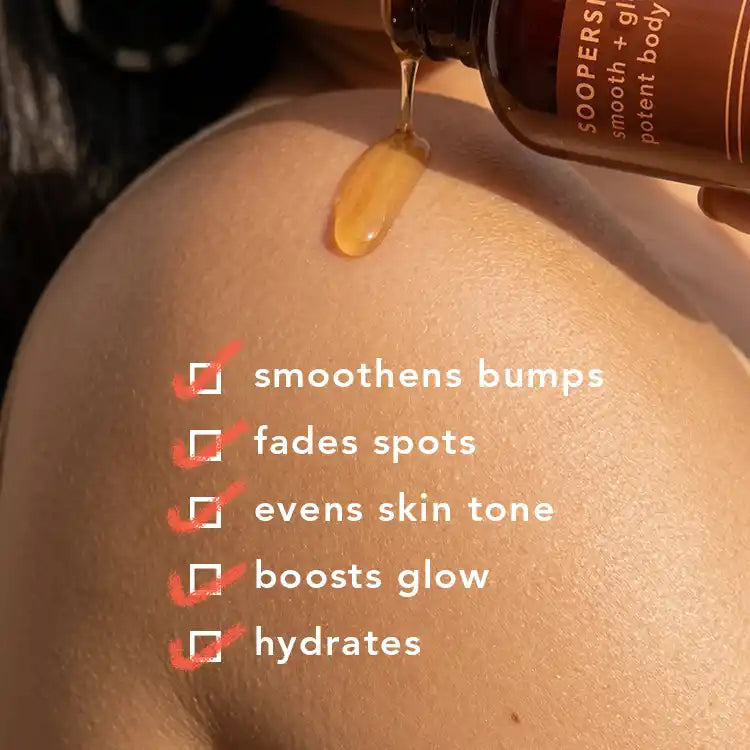
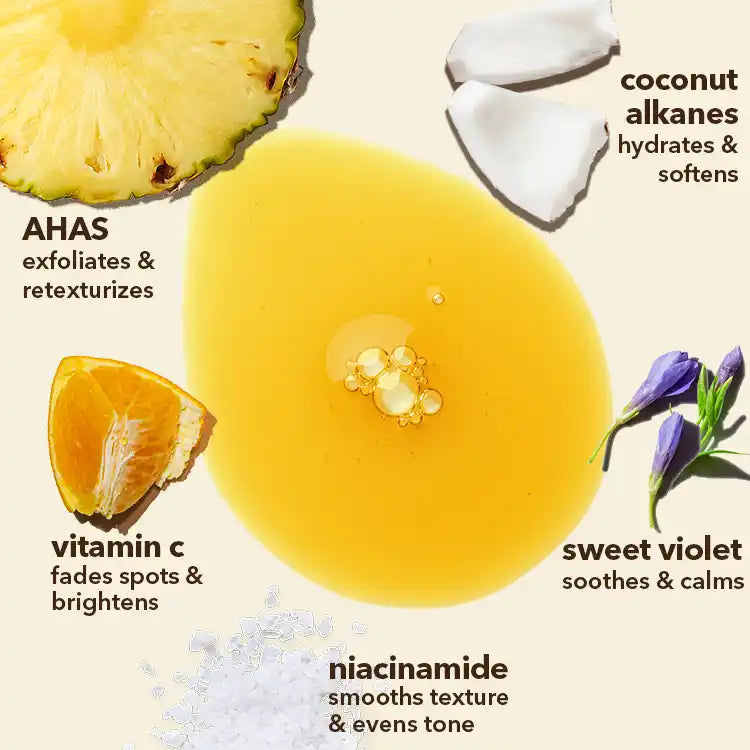
Glycolic + Lactic Acid: smooths rough, bumpy skin
Vitamin C + Niacinamide: brightens and evens tone
Hyaluronic Acid + Coconut Alkanes: hydrates and nourishes
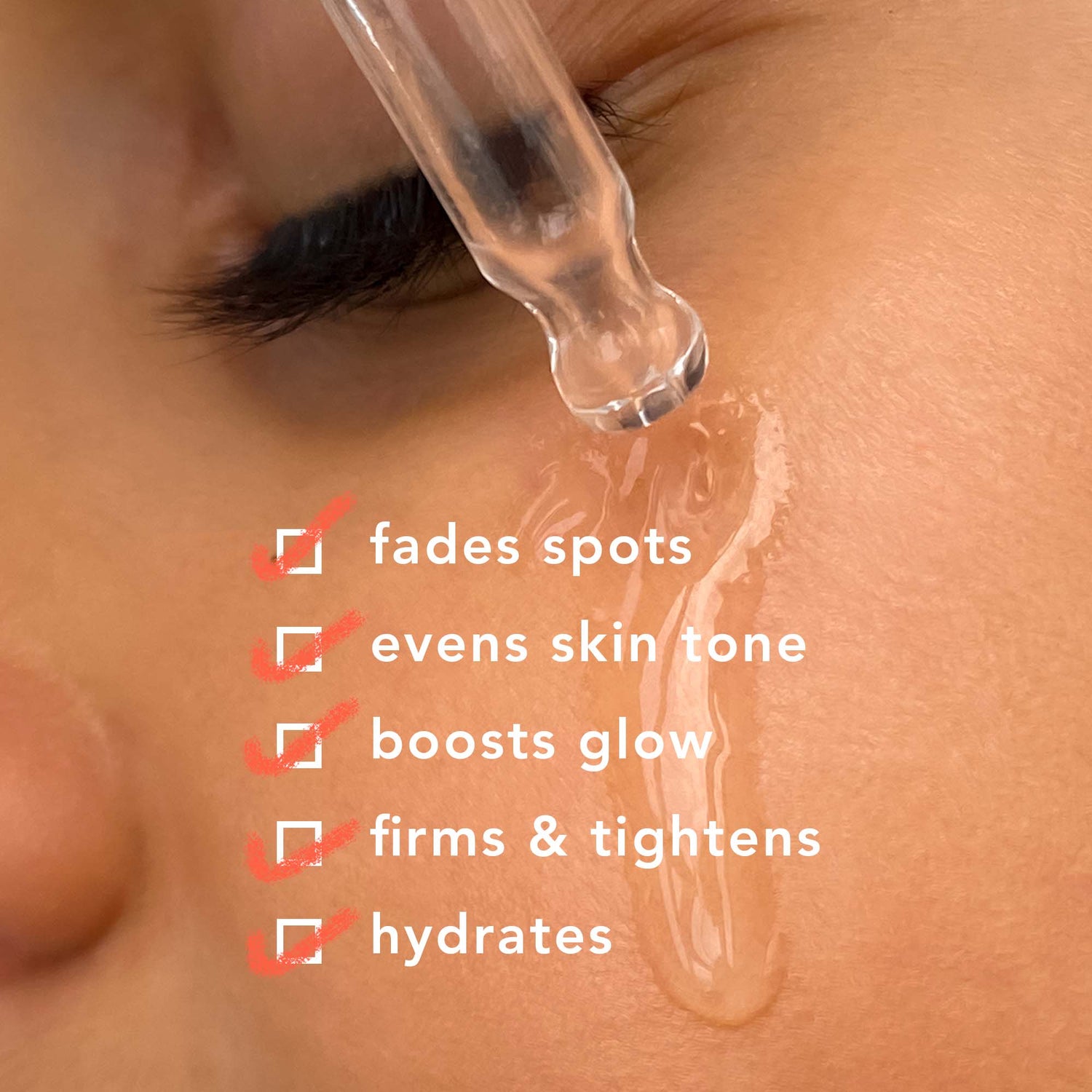
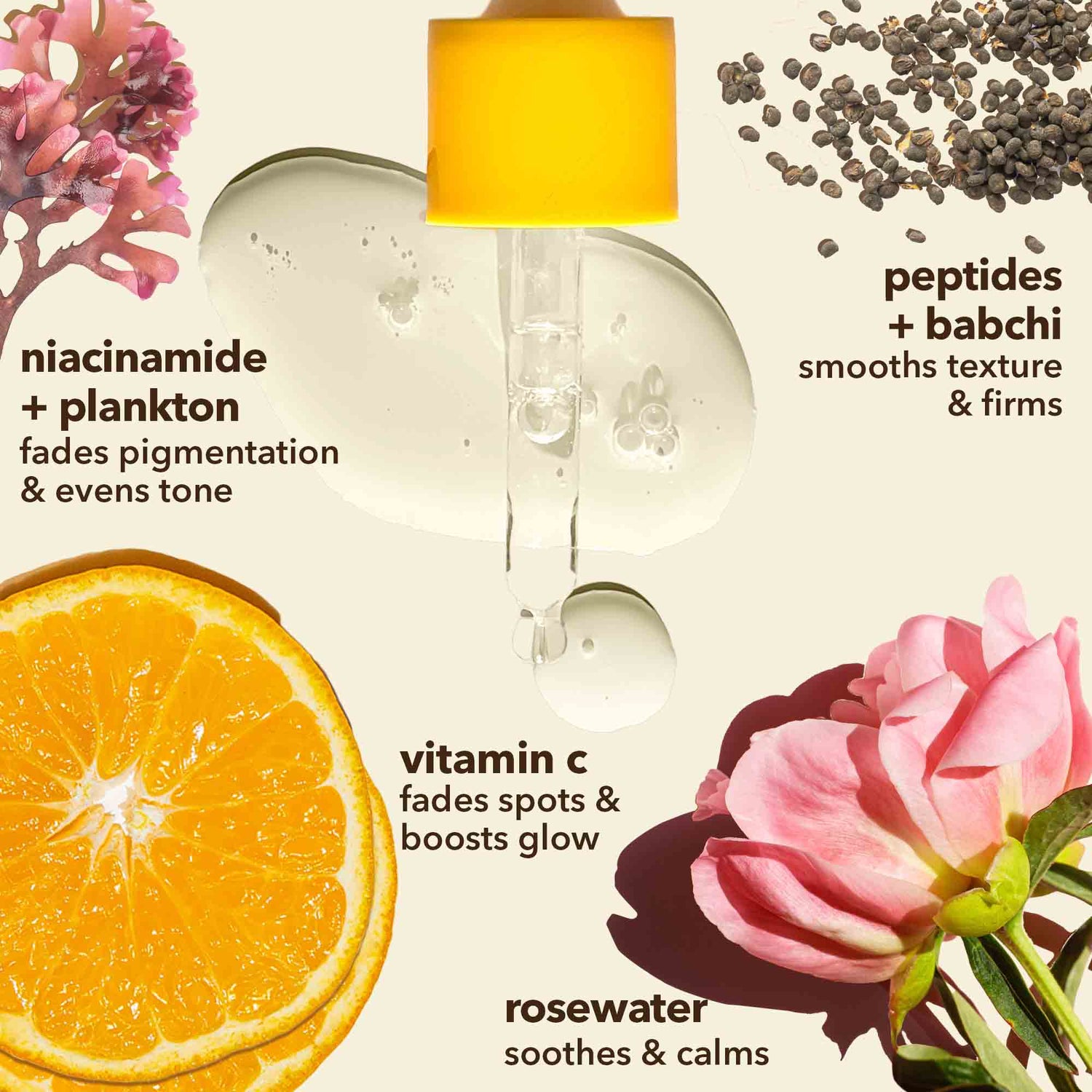
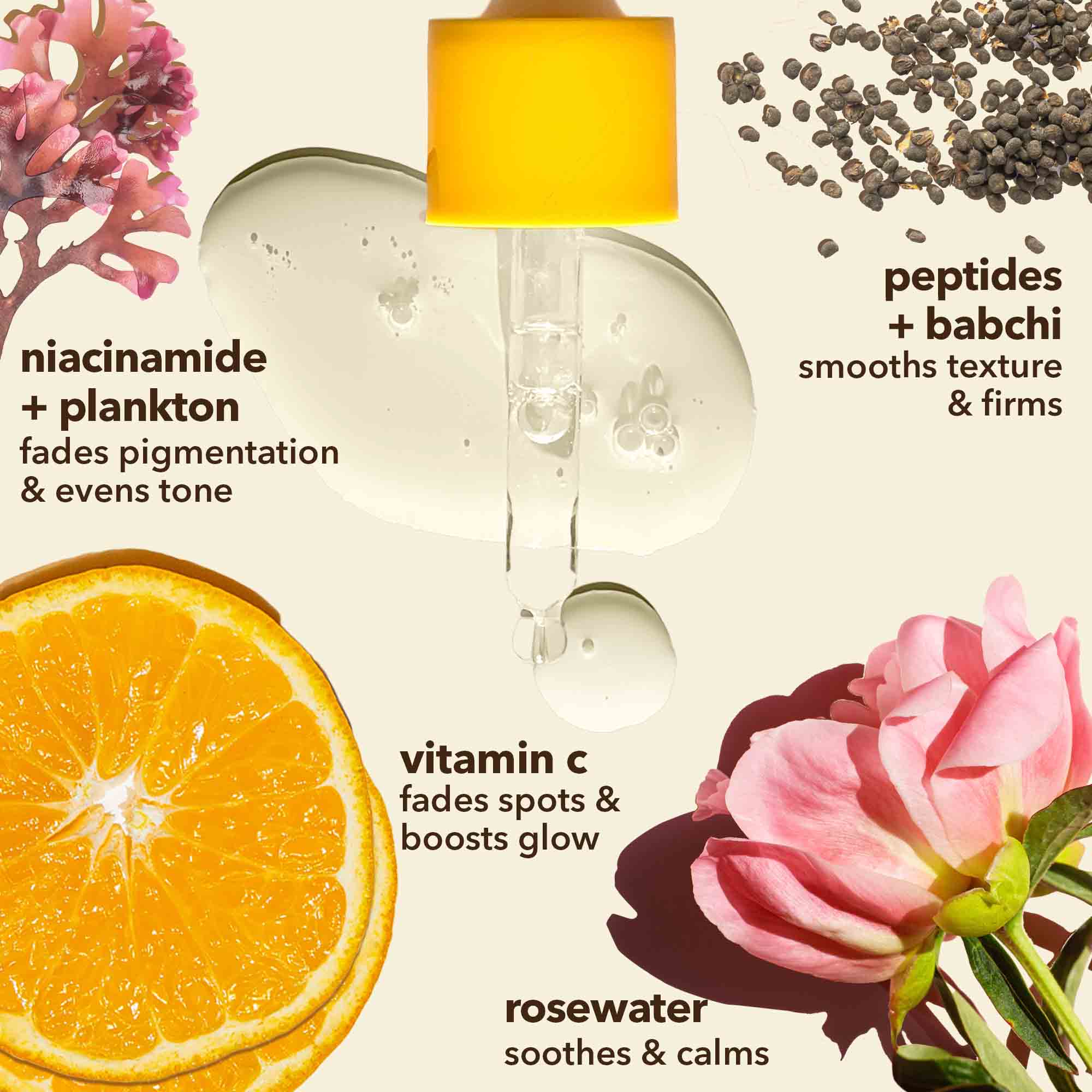
12% Vitamin C + Jamun: brightens and fades pigmentation
Niacinamide + Plankton: evens tone and targets dark spots
Peptides + Babchi: firms and plumps
Hyaluronic Acid + Rosewater: hydrates and soothes
Massage a few drops into each area of your body* — focus on spots that need extra love. It’s potent, so less is more.
The silky texture sinks in fast. No stickiness, no wait time.
Use morning and night for extra-smooth results.
*For body only, not your face.
And don’t forget SPF during the day.
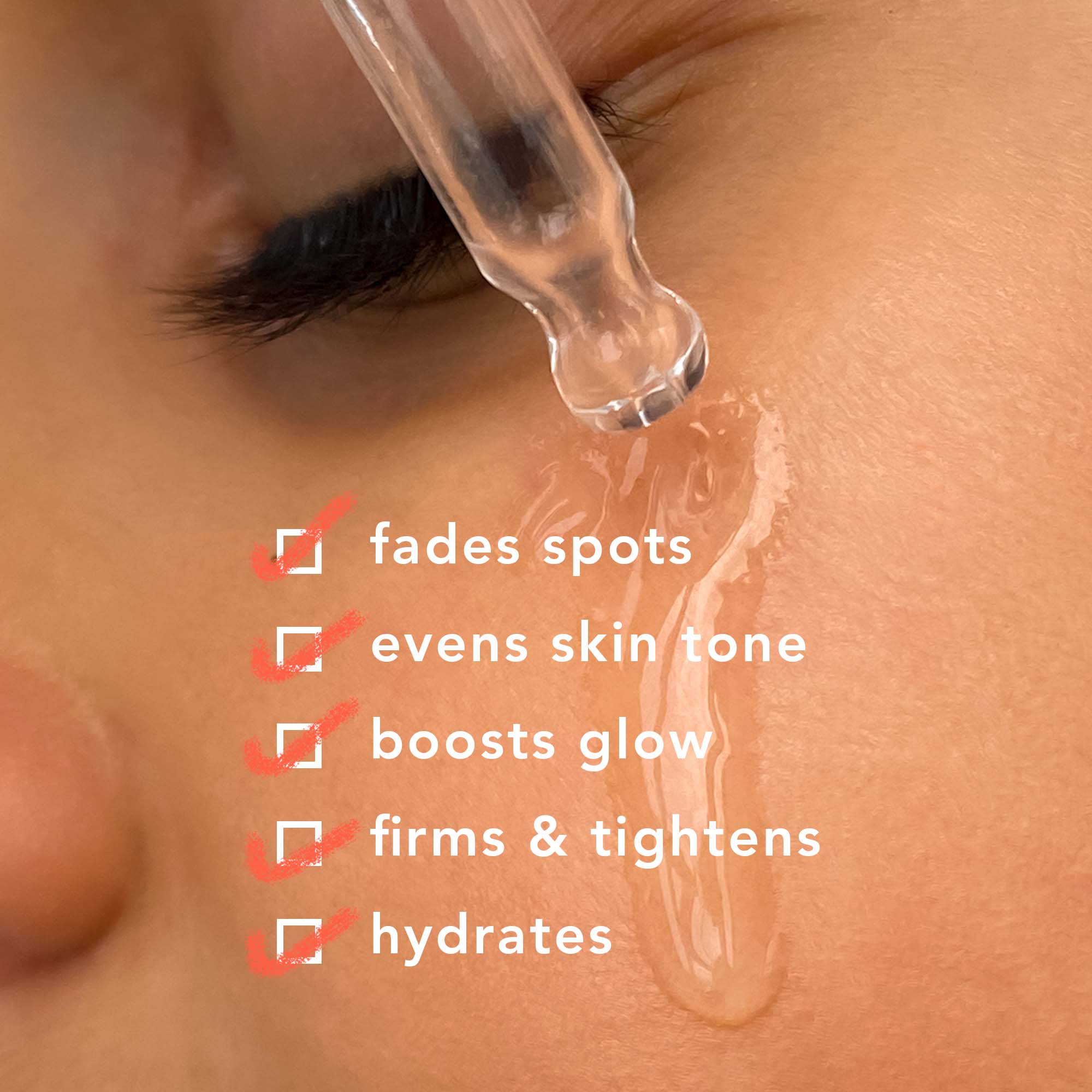
Smooth 2-4 drops over your face and neck.
Use morning and night to boost brightening.
And always follow with SPF during the day.
I'm suitable for:

*A patch test is always a good idea before you use me everywhere. Most skin types get along with me just fine, but when strong actives come together, sometimes skin reacts. Better to play safe and test first.
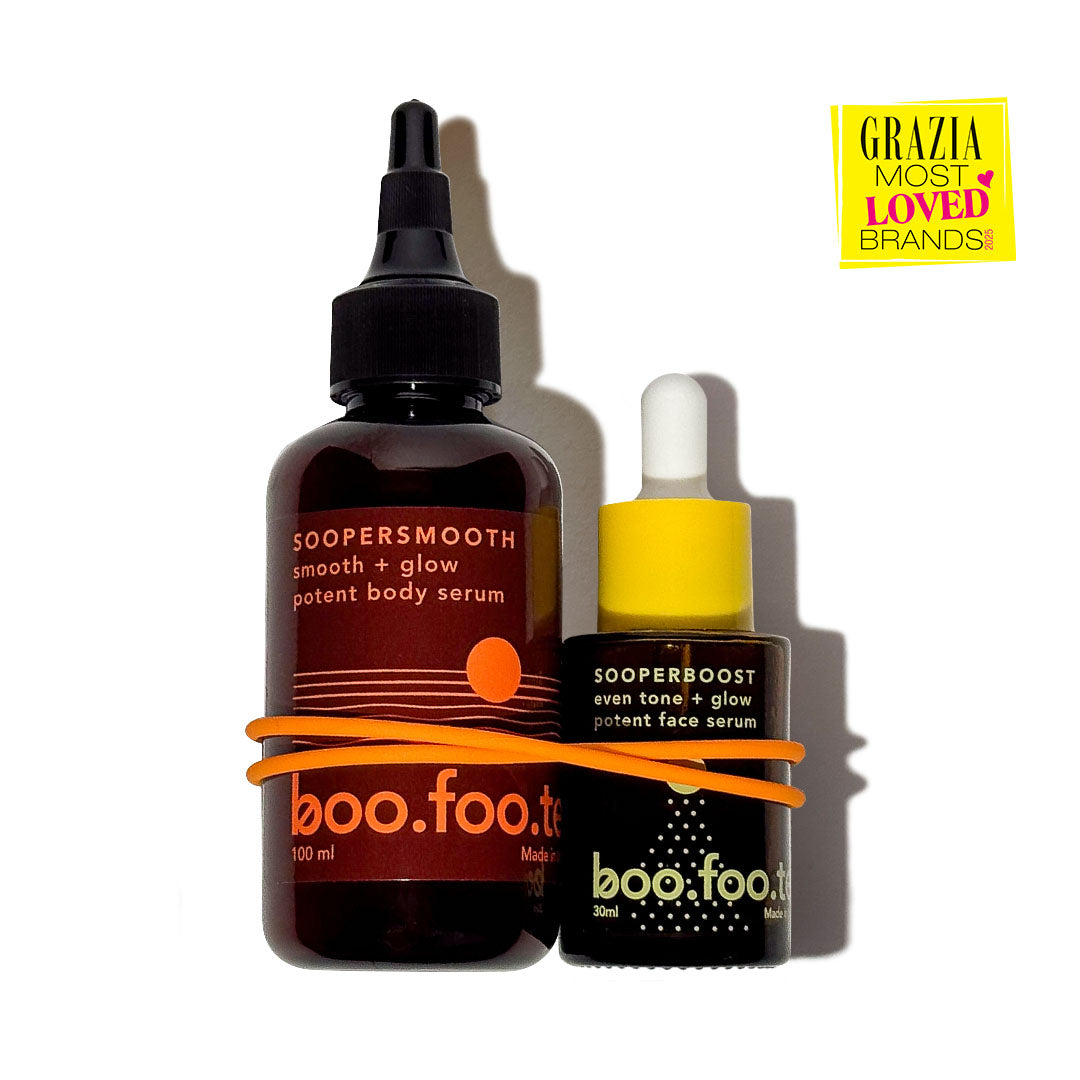







The skin on your body is thicker than the skin on your face — which means it needs higher concentrations of active ingredients to actually make a difference.
Soopersmooth is formulated with percentages strong enough to work on body skin, while Sooperboost is calibrated for the more delicate skin on your face.
Use your face serum on your body and you're essentially under-dosing. Use a body serum on your face and you risk irritation.
The Duo exists because your skin isn't one-size-fits-all — and your serums shouldn't be either.
Fair question. The short answer: what's inside it.
Your body skin is thicker and tougher — so it responds really well to tried-and-tested actives like L-Ascorbic Acid, Glycolic Acid, Lactic Acid, Niacinamide and Hyaluronic Acid. These are gold-standard ingredients that genuinely work, and Soopersmooth is packed with them.
Your face skin is a different story. More delicate, more exposed, and dealing with concerns that need more sophisticated — and significantly more expensive — ingredients to treat. Sooperboost uses 3-O-Ethyl Ascorbic Acid instead of regular Vitamin C — a more stable, more effective form that costs considerably more to source. It also contains Matrixyl Synthe'6, one of the most clinically backed peptides in skincare for firming and plumping, and not a cheap ingredient to put in a formula.
So it's not that one serum is better than the other. It's that each one is exactly right for the skin it's made for.
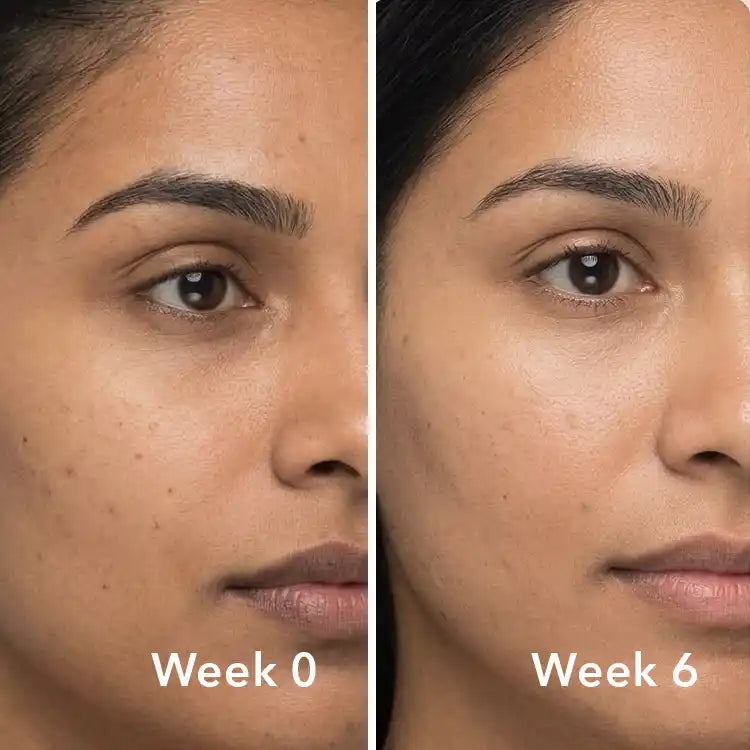
Most people notice a glow within the first week. For darker spots, pigmentation and smoother texture, give it 4–6 weeks of consistent twice-daily use.
We'd strongly advise against it. Soopersmooth is formulated with percentages strong enough to work on the thicker skin on your body — which means it's too potent for the delicate skin on your face and could cause irritation or a reaction. Keep it below the neck.
Both serums are super lightweight and absorb fast — that's kind of their thing. They hydrate well on their own, but because they're so light, following up with a moisturiser is a good idea, especially if your skin tends to be dry or it's winter. Not mandatory, but your skin will thank you for it.
Try to finish them within 2 months of opening.
Both serums contain active ingredients that lose their potency over time — especially when exposed to air and light, which causes oxidation.
We've done our bit by using amber bottles and twist caps to slow that process down. But once you've popped it open, the countdown begins.
Twice daily use means you'll likely finish them well within that window anyway.
Both serums are potent, concentrated formulas with active ingredients — so if your skin is sensitive or prone to reactions, please patch test before going all in. Apply a small amount to the inside of your arm, wait 24 hours, and see how your skin responds. We want you to love your results, and since we don't offer refunds or returns, it's worth taking that extra step first.
Non-negotiable. Both serums contain Vitamin C, which means your skin needs sun protection in the morning. Every morning.
Not necessarily — but it is a sign that oxidation is happening. This is completely normal with Vitamin C serums.
When Vitamin C is exposed to air and light, it gradually darkens in colour. It doesn't mean the serum is unsafe to use, but it does mean the actives are losing their strength.
This is exactly why we use amber bottles and twist caps — to slow it down as much as possible.
The best way to keep your serum working at full power? Use it consistently, close the cap properly after every use, and finish it within 2 months of opening.
Why your neck darkens, and what helps.

The Ingredient Guide Your Skin Has Been Waiting For

Your moisturiser isn't enough anymore — here's why the body serum is the upgrade your skin has been waiting for.

The K-beauty trend everyone's copying — and why Indian skin needs something completely different