

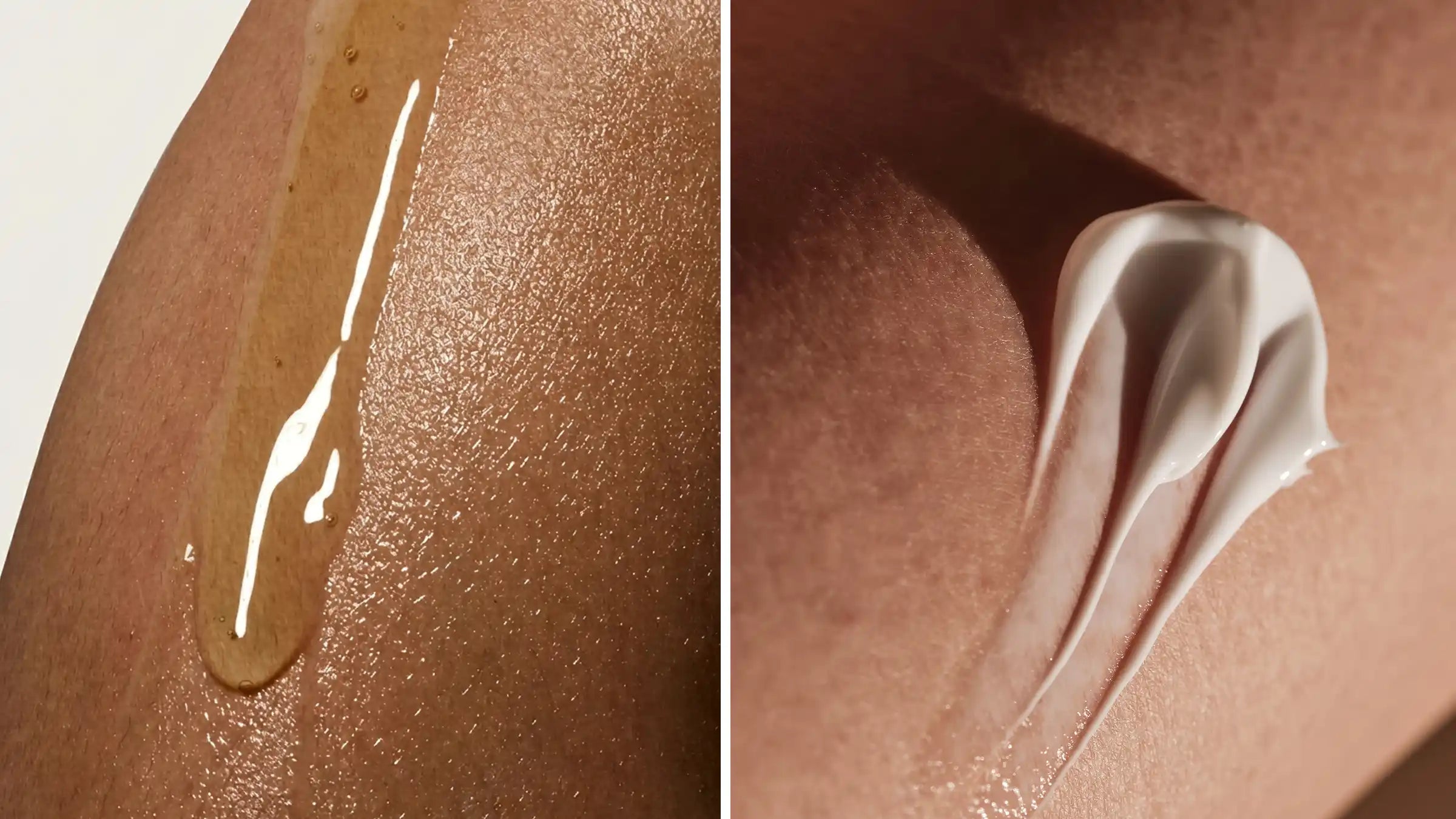
Body Serum vs Body Lotion: What Indian Skin Actually Needs

Your moisturiser isn't enough anymore — here's why the body serum is the upgrade your skin has been waiting for.

Table of Contents

What Is a Body Serum? What Is a Body Lotion?
Body Serum vs Body Lotion: The Key Differences
Why Indian Skin Has Unique Needs
Why Body Serum Wins for Indian Skin
Meet Soopersmooth: The Body Serum Made for Indian Skin
How to Use a Body Serum Correctly
Do's and Don'ts
Key Takeaways
FAQs

What Is a Body Serum? What Is a Body Lotion?

If you've ever slathered on moisturiser and still felt like your skin was somehow… unsatisfied — dry patches still lurking, dark spots untouched, skin feeling coated rather than nourished — you're not imagining things. Your lotion is doing the bare minimum. And for Indian skin, that's simply not enough.

A body lotion is an emollient: it sits on the surface of the skin, trapping moisture in and temporarily softening the texture. It's mostly water, oils, and waxes. Great at what it does — but it doesn't treat anything.

A body serum, on the other hand, is a concentrated, active-ingredient-rich formula with smaller molecular weight. It penetrates deeper into the skin to address real concerns — pigmentation, uneven texture, dullness, roughness. Think of it the way you think about your face serum. You wouldn't skip that. Why are you skipping it on your body?

Think of your body lotion as a cosy blanket. Your body serum is the medicine — and for Indian skin dealing with tan, pigmentation, and dry patches, you need the medicine.

What is a body serum? Visual guide comparing body serum and body lotion, explaining ingredients, skin benefits, hydration, brightening, smoothing and treatment of pigmentation for Indian skin.

Body Serum vs Body Lotion: The Key Differences

   Feature    Body Lotion    Body Serum
Texture Thick, creamy Lightweight, fluid
Absorption Surface-level Deep skin penetration
Active ingredients Minimal / basic High-concentration actives
Targets pigmentation ✔️
Exfoliates skin ✔️ (chemical exfoliation)
Brightens & evens tone Rarely ✔️
Addresses dark inner thighs, elbows, knees ✔️
Fragrance-heavy Often Usually minimal
Works for Indian skin concerns Partially Yes, specifically

Why Indian Skin Has Unique Skincare Needs

Indian skin sits across Fitzpatrick types III–VI — meaning it's rich in melanin, resilient to UV damage, but deeply prone to hyperpigmentation, post-inflammatory darkening (PIH), and uneven skin tone. Add to that the reality of India's climate — intense sun, humidity, pollution, heat — and you have skin that faces a very specific set of challenges.

Dark inner thighs

Tan on arms & neck

Rough elbows & knees

Dull, uneven body skin

Pigmentation patches

Body breakouts

Thick, flaky skin

Post-wax darkness

Most body lotions — even the popular ones in Indian pharmacies and supermarkets — are formulated for Western skin in cold, dry climates. They address dryness, not tan. They soften, but don't brighten. They moisturise, but don't exfoliate. Indian skin needs more.

"Indian skin is not just 'darker' — it behaves differently, heals differently, and needs ingredients that work with its melanin, not against it."

Before/after reference (illustrated). Alt: "Body serum for dark elbows pigmentation Indian skin"

Why Body Serum Wins for Indian Skin

Here's the honest truth: if you're Indian and you've been using only a body lotion and wondering why your skin tone on your body looks nothing like your face — it's because your body never got the treatment your face did.

A body serum closes that gap. Here's why it wins:

1. It actually treats hyperpigmentation

Indian skin is especially prone to PIH (post-inflammatory hyperpigmentation) — from sun exposure, friction, waxing, shaving, and even tight clothing. Only active ingredients like Vitamin C, Niacinamide, and AHAs (Glycolic Acid, Lactic Acid) can intervene at the melanin level and fade that darkness over time.

2. It chemically exfoliates — gently

AHAs like Glycolic Acid and Lactic Acid work by dissolving the bonds between dead skin cells, allowing fresh, brighter skin to surface. This is what softens rough elbows and knees, reduces body KP (keratosis pilaris), and smooths bumpy skin — things no lotion can do.

3. It hydrates and treats simultaneously

Ingredients like Hyaluronic Acid deliver deep hydration while actives do their brightening work. You're not choosing between moisture and results — you get both.

4. It's lighter in Indian heat

Heavy cream lotions in Indian summers are a recipe for clogged pores and discomfort. Body serums are lightweight and absorb fast — no greasy residue, no sweaty film.

Daily routine to remove tan from face and body for Indian skin with actives and sunscreen

How to Use a Body Serum the Right Way

Applying a body serum isn't complicated — but how you apply it affects how well it works. Here's the correct routine:

  1. Start with clean, slightly damp skin — after a shower is ideal. Moisture helps actives absorb better.
  2. Apply a body serum first, before any other product. Serums go on skin, not on top of moisturiser.
  3. Focus on concern areas — dark elbows, inner thighs, knees, neck, underarms. Massage gently in circular motions.
  4. Let it absorb for 60–90 seconds before getting dressed.
  5. Follow with sunscreen on exposed areas — especially important when using AHAs. Sun protection amplifies results and prevents re-darkening.
  6. Use at night for maximum results — AHAs work best without sun exposure interfering.
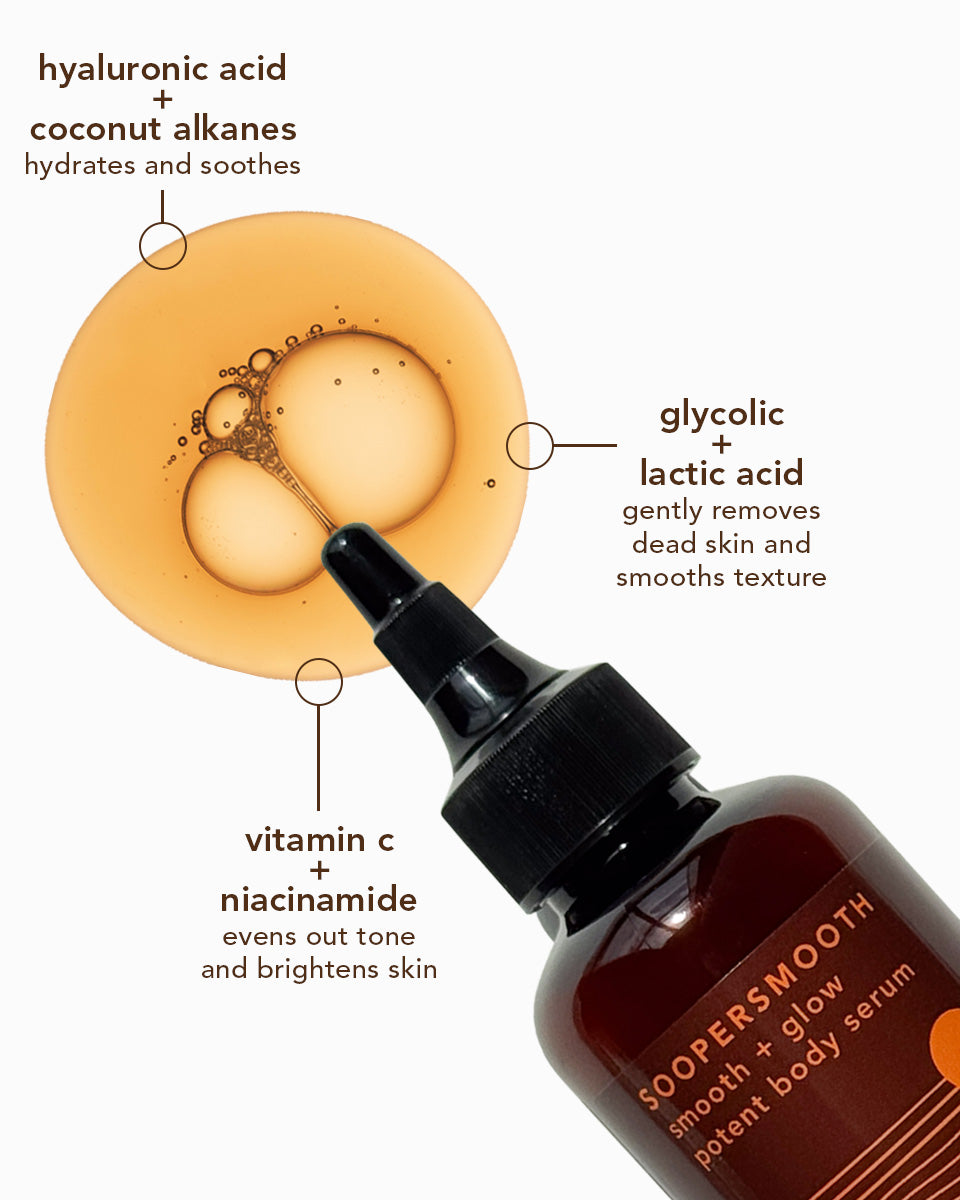
Boofootel Sooperboost exfoliates, hydrates and brightens with glycolic and lactic acid, vitamin c and niacinamide, hyaluronic acid and coconut alkanesBoofootel Sooperboost exfoliates, hydrates and brightens with glycolic and lactic acid, vitamin c and niacinamide, hyaluronic acid and coconut alkanes

Meet Soopersmooth: The Body Serum Made for Indian Skin

Built with one question in mind: What does a body serum for Indian skin actually need? The answer is in every ingredient.

  • Glycolic + Lactic Acid – For gentle yet effective exfoliation.
  • Vitamin C – Helps fade those little dark spots left behind.
  • Niacinamide – Calms redness and evens out tone.
  • Hyaluronic Acid + Glycerin – Delivers weightless, non-greasy hydration.
  • Coconut Alkanes – A luxe, featherlight alternative to mineral oil that makes your skin feel like silk.

Do's and Don'ts: Body Serum Edition

  • Do's

    ✔️ Apply on damp skin after shower

    ✔️ Use SPF on exposed areas daily

    ✔️ Be consistent — results take 4–6 weeks

    ✔️ Focus on problem areas like inner thighs, elbows, knees

    ✔️ Start with every other day if skin is new to AHAs

    ✔️ Store in a cool, dry place away from direct sunlight

    ✔️ Do a patch test before first use

  • Dont's

    ❌ Apply on broken, irritated, or freshly waxed skin

    ❌ Layer over a thick moisturiser — apply first

    ❌ Expect overnight results — actives need time

    ❌ Use on face — this is formulated for body skin

    ❌ Skip sun protection — AHAs increase photosensitivity

    ❌ Use more than twice daily

    ❌ Ignore your neck and décolleté — they need love too

Key Takeaways

  • Body lotions hydrate the surface; body serums treat skin at a deeper level with active ingredients.
  • Indian skin has unique concerns — tan, pigmentation, rough texture, dark patches — that lotions simply cannot address.
  • AHAs (Glycolic + Lactic Acid), Niacinamide, and Vitamin C are the MVPs for Indian body skin brightening and pigmentation correction.
  • Soopersmooth by Boofootel is the first body serum formulated specifically with Indian skin concerns and India's climate in mind.
  • Consistency is everything — use it regularly for 4–6 weeks to see visible results in tone, texture, and glow.
  • Always follow with SPF on exposed areas when using AHA-based products.

FAQs

Can I use body serum and body lotion together?

Yes! And for drier skin types, this is actually recommended. Apply the serum first on clean skin, let it absorb, then layer a light lotion or body oil over it to seal in the actives and lock in moisture. Think of it as the serum treating, and the lotion protecting.

Is body serum good for dark inner thighs?

Absolutely. Dark inner thighs are a common concern for Indian skin and are caused by friction, hormonal changes, and post-inflammatory hyperpigmentation.

Ingredients like Niacinamide, Lactic Acid, and Vitamin C in Soopersmooth work directly on melanin pathways to fade this darkness with consistent use over 6–8 weeks.

Can I use body serum on my neck and underarms?

Yes! The neck, décolleté and underarms are among the most commonly neglected areas in Indian body care. Soopersmooth is formulated to be safe for these areas. For underarms especially, Lactic Acid and Niacinamide help reduce post-waxing and post-shaving darkening over time.

Does body serum lighten skin?

A body serum doesn't bleach or lighten skin beyond its natural tone. What it does is even out skin tone by fading hyperpigmentation and dark patches, resulting in a more uniform, brighter appearance. The goal is healthy, glowing skin — not a different skin tone.

What does glycolic acid do for body skin?

Glycolic acid is an alpha hydroxy acid (AHA) that chemically exfoliates the skin by dissolving the bonds between dead skin cells.

On the body, this means smoother elbows, reduced keratosis pilaris (KP / chicken skin), faded dark patches, and an overall more even, glowing texture. It's one of the most researched ingredients in dermatology.

Is it safe to use niacinamide on body skin every day?

Yup, Niacinamide is one of the gentlest, most well-tolerated actives for daily use. It's suitable for all Indian skin tones and types, including sensitive skin. It works by regulating melanin production, reducing redness, and strengthening the skin barrier.

How long does it take to see results from a body serum?

Most people notice improvements in skin texture and softness within 2 weeks. Visible brightening and pigmentation reduction typically takes 4–8 weeks of consistent use. Sun protection is essential during this time to prevent new pigmentation from undoing progress.

Written by

Delara Lalwani

Delara started Boofootel because she couldn't find a single skincare brand that was built around Indian skin. Its tone, its climate, its concerns. Not adapted for it. Not marketed to it. Actually built for it. So she did it herself.

She writes about skin science the way she wishes someone had explained it to her — clearly, honestly, without the jargon.

📖 SOURCES & REFERENCES

Hakozaki T, et al. – The Effect of Niacinamide on Reducing Cutaneous Pigmentation and Suppression of Melanosome Transfer
British Journal of Dermatology – PubMed

Indian Journal of Dermatology – 80% Lactic Acid Peel Versus 50% Glycolic Acid Peel for Melasma in Indian Patients
journals.lww.com – 2025

Athenaeum Scientific Publishers – Hyperpigmentation Management Perspectives: A Nationwide Survey of Indian Dermatologists
athenaeumpub.com – 2026