Dark spots, acne marks, melasma — here’s the realistic timeline (and what actually works for Indian skin). If you’ve ever searched:
-
“How long does hyperpigmentation take to fade?”
-
“Best treatment for pigmentation in India”
-
“How to remove acne marks fast”
You’re not alone.
Hyperpigmentation is one of the most common skin concerns in Indian skin, and one of the most misunderstood.
Let’s break it down so you know exactly what to expect.
What This Article Covers
-
Why hyperpigmentation is common in Indian skin
-
Types of Hyperpigmentation in Indian Skin
-
How long hyperpigmentation takes to fade (Indian Timeline)
-
Best ingredients for hyperpigmentation in Indian skin
-
FAQs
 Why Hyperpigmentation Is So Common in Indian Skin
Indian skin naturally contains more active melanocytes (melanin-producing cells). That’s a strength, but it also means pigmentation is triggered more easily.
Indian skin is more prone to hyperpigmentation because:
-
Melanin production is more reactive
-
Even mild inflammation can leave dark marks
-
Pigment penetrates deeper into the skin
-
Healing often produces pigment as a by-product
This is why:
-
Acne leaves marks that last months
-
Minor bumps on the body turn into dark patches
-
Aggressive treatments often worsen pigmentation
-
Over-exfoliation causes rebound darkening
For Indian skin, calm, consistent treatment works better than harsh correction.
Types of Hyperpigmentation in Indian Skin
Understanding the type of pigmentation is essential for choosing the right treatment.
1. Post-Inflammatory Hyperpigmentation (PIH)
Commonly called acne marks.
Triggered by acne, irritation, or inflammation.
Most common in Indian skin.
2. Melasma
Hormonal pigmentation.
Appears as patchy brown areas on cheeks, forehead, or upper lip.
Common during pregnancy or hormonal changes.
3. Sun-Induced Pigmentation
Also called sun spots.
Caused by UV exposure.
Deepens quickly without protection.
4. Uneven Skin Tone & Body Pigmentation
Common on elbows, knees, inner thighs, and areas prone to friction or natural bumps.
Different types fade at different speeds.

How Long Does Hyperpigmentation Take to Fade? (Indian Skin Timeline)
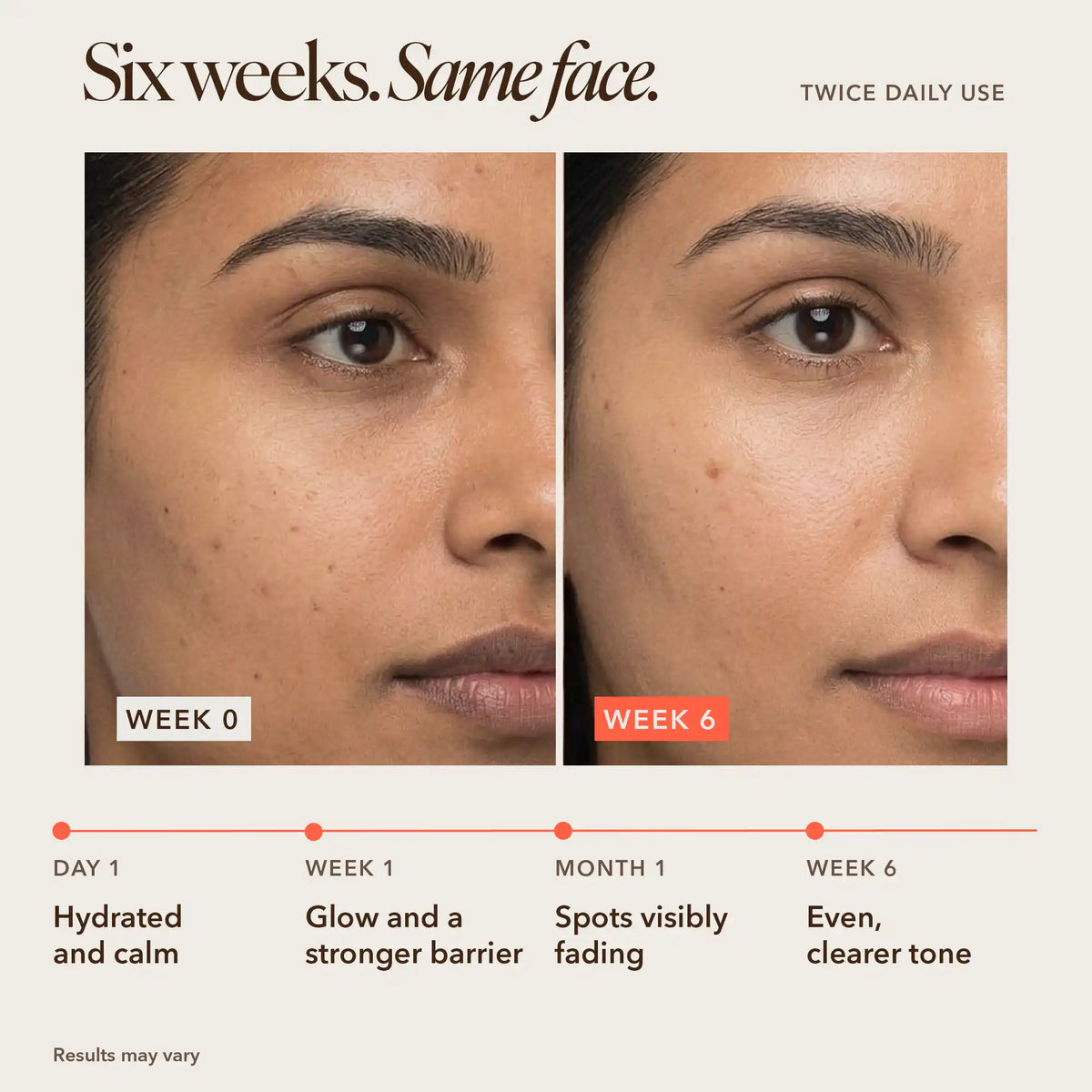
Most Indian skin begins to see visible fading in 8–12 weeks with consistent use of targeted ingredients like Vitamin C, Niacinamide, and gentle exfoliating acids.
Deeper pigmentation such as melasma or long-standing dark spots can take 3–6 months or longer, depending on consistency, sun protection, and skin health.
A Realistic Pigmentation Timeline
|
Time Frame |
What’s Happening in Your Skin |
What You’ll Actually Notice |
What This Means |
|
Weeks 1–3 |
Skin barrier is repairing and inflammation is calming |
Skin feels smoother and more hydrated, but pigmentation looks the same |
This phase is about skin health, not fading yet |
|
Weeks 4–6 |
Melanin production begins regulating |
Dark spots may look lighter at the edges, tone starts evening out |
Early signs of progress — don’t stop now |
|
Weeks 8–12 |
Pigment turnover becomes visible |
Dark spots clearly fade, skin looks more even |
First noticeable “wow” moment for most Indian skin |
|
3–6 Months |
Deeper pigment gradually breaks down |
Older and body pigmentation improves significantly |
Results stabilize and are less likely to rebound |
In summary:
-
Fresh acne marks → 6–8 weeks
-
Moderate dark spots → 8–12 weeks
-
Melasma or deep pigmentation → 3–6+ months
Consistency matters more than intensity.

Best Ingredients for Hyperpigmentation in Indian Skin
Not every brightening ingredient works the same way — especially on Indian skin.
Because melanin activity is higher, dark spots need ingredients that gently regulate pigment, smooth cell turnover, and support the skin barrier without causing irritation. The goal isn’t harsh peeling. It’s steadily fading.
Here are the ingredients that actually make a difference — and why.
Vitamin C (L-Ascorbic Acid)
-
Inhibiting tyrosinase (enzyme responsible for melanin production)
-
Reducing oxidative stress from UV exposure
-
Brightening dull skin
-
Improving uneven skin tone
Studies show that consistent Vitamin C use reduces hyperpigmentation over 8–12 weeks.
It’s ideal for:
-
Acne marks
-
Sun spots
-
Early pigmentation
Niacinamide (Vitamin B3)
Niacinamide helps by:
-
Reducing transfer of melanin to skin cells
-
Calming inflammation
-
Strengthening the skin barrier
-
Preventing new pigmentation from forming
This is especially important for Indian skin, where inflammation easily triggers pigmentation.
It’s gentle and safe for daily use.
Glycolic Acid (AHA)
Glycolic acid works by:
-
Exfoliating pigmented surface cells
-
Increasing cell turnover
-
Improving texture
-
Enhancing penetration of other actives
By removing pigmented dead skin cells, it helps fade dark spots faster.
Best for:
-
Acne marks
-
Uneven skin tone
-
Dullness
Lactic Acid
Gentler than glycolic acid, lactic acid:
-
Exfoliates
-
Hydrates
-
Improves skin smoothness
Ideal for sensitive Indian skin dealing with pigmentation.
Alpha Arbutin
-
Directly targets melanin production
-
Is effective for stubborn dark spots
-
Works well alongside Vitamin C
Peptides
Peptides support:
-
Skin repair
-
Collagen production
-
Barrier strengthening
Healthy skin repairs pigmentation faster.
Hyaluronic Acid & Glycerin
Hydration matters. When skin is dehydrated:
-
Pigmentation looks darker
-
Barrier becomes compromised
-
Inflammation increases
Hydrating ingredients help actives work better and reduce irritation.
If you’re looking for a brightening serum for Indian skin dealing with:
-
Dark spots
-
Acne marks
-
Uneven skin tone
-
Dullness
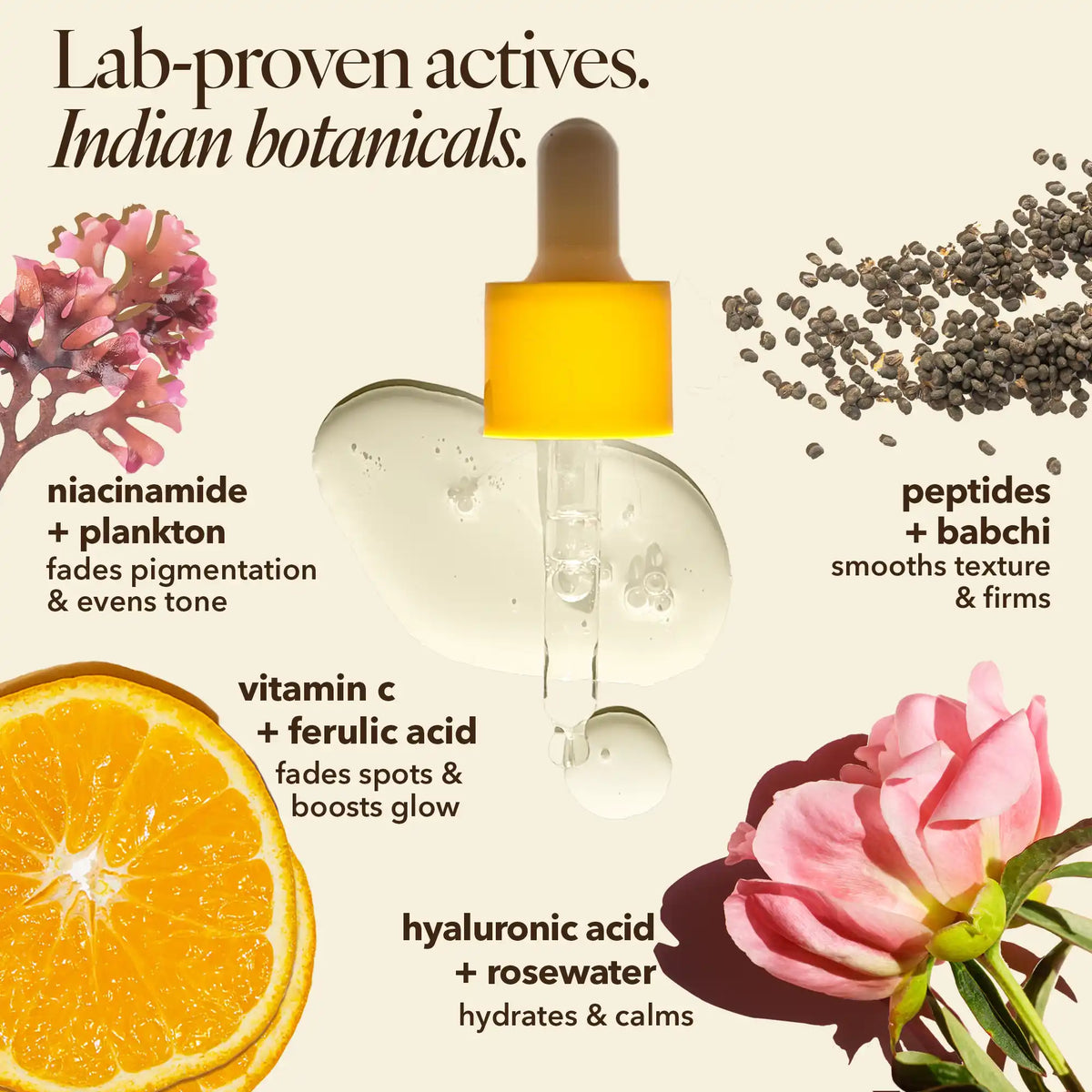
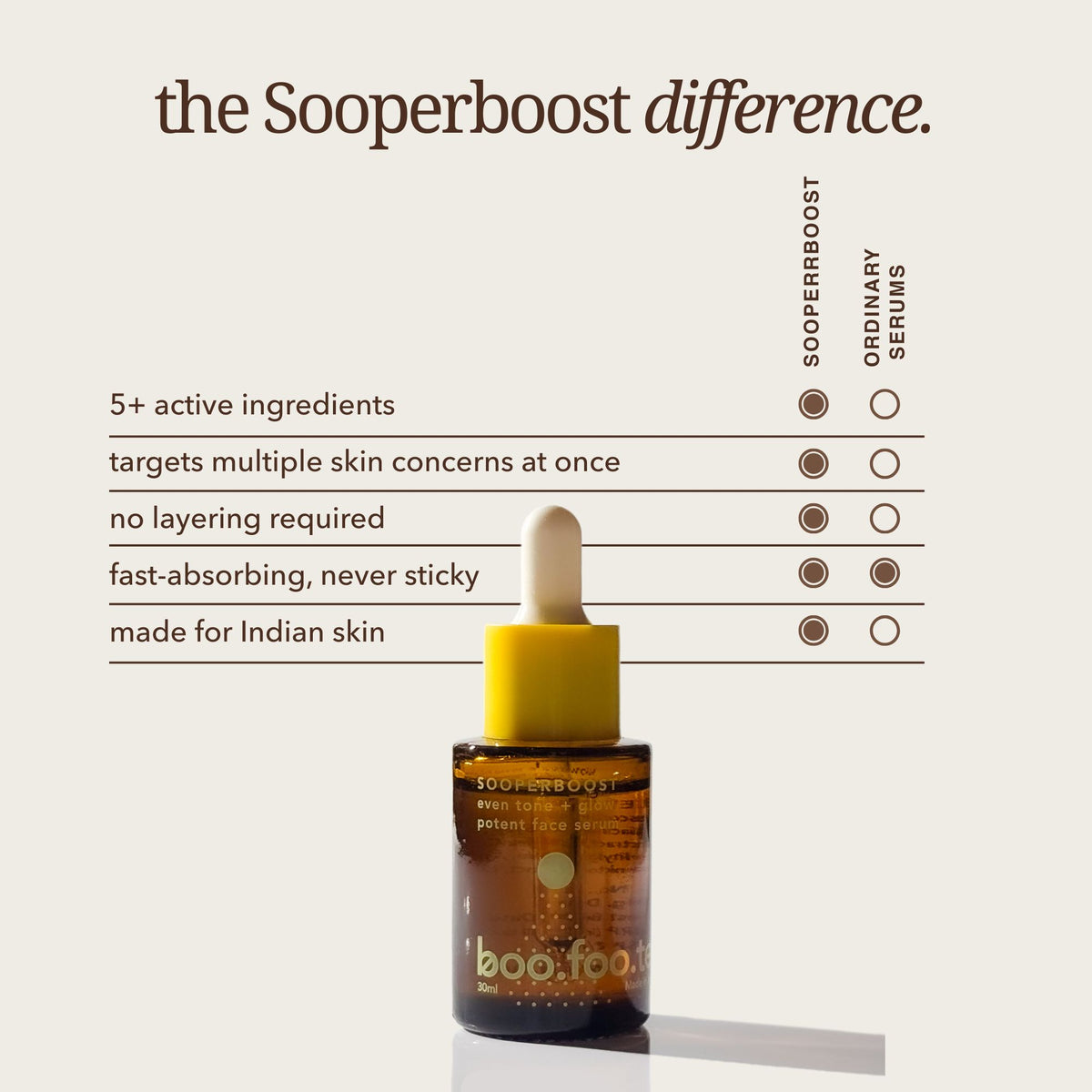
A formula combining Vitamin C + Niacinamide + Peptides + Hyaluronic Acid in balanced concentrations tends to work more effectively than single-ingredient products.
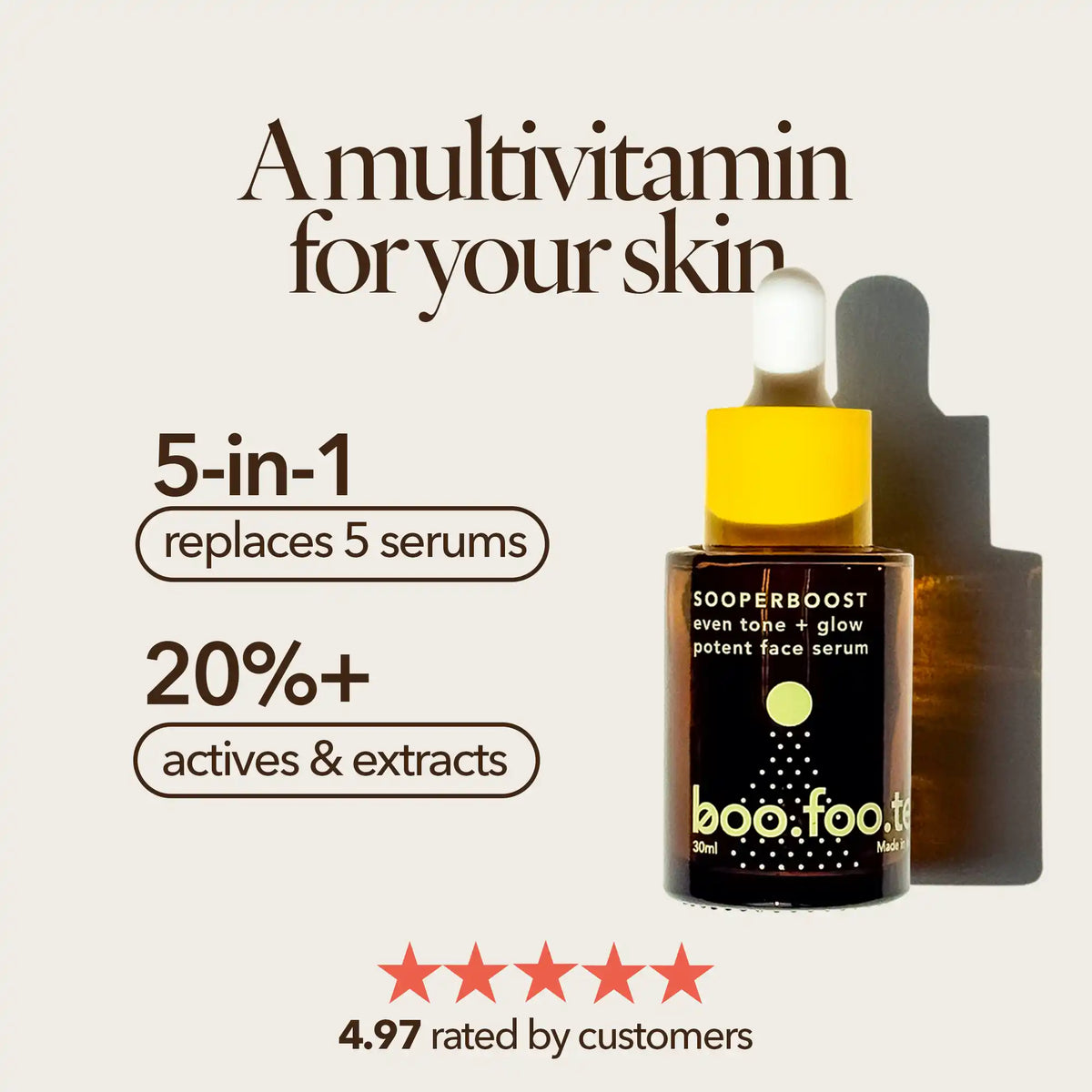
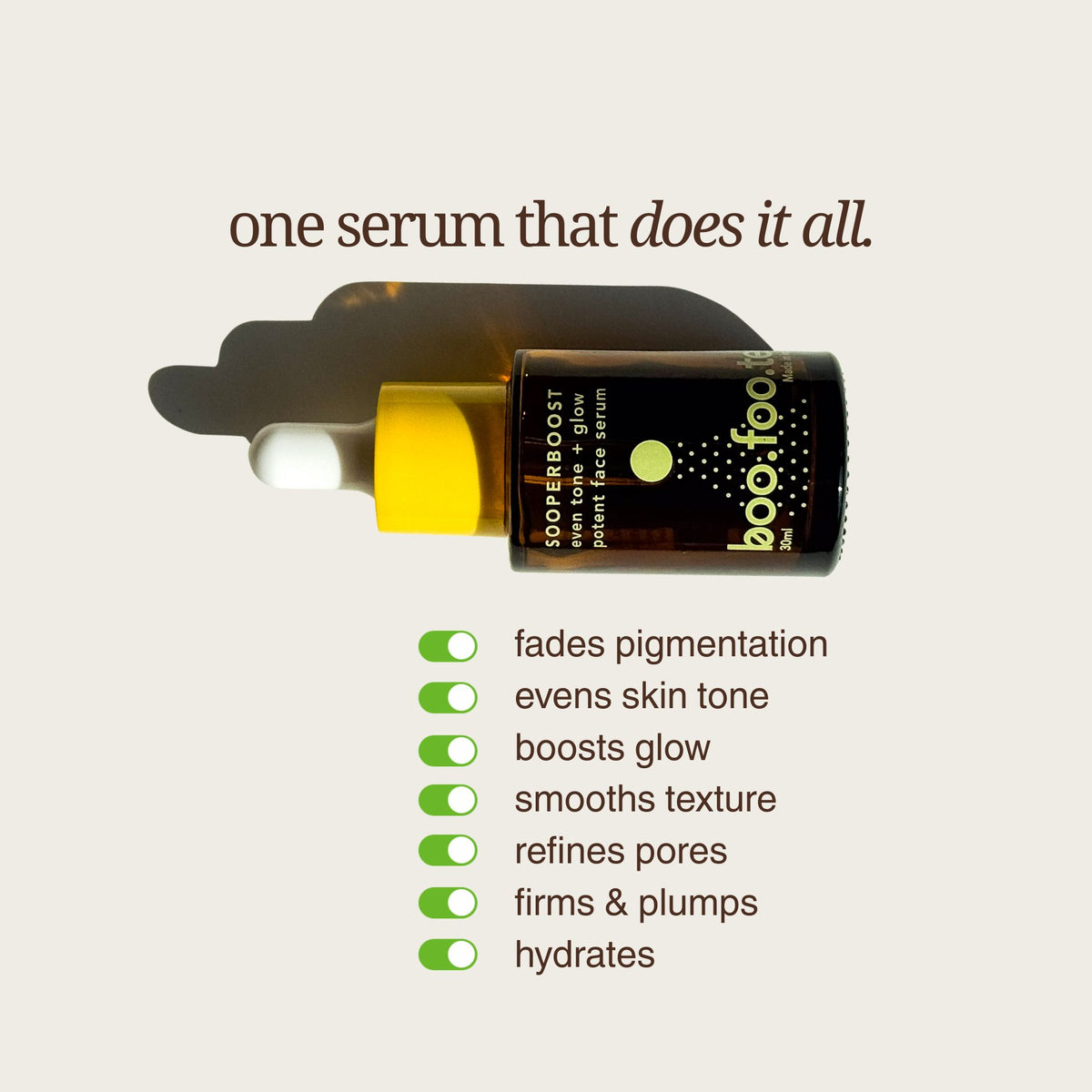
If you’re starting your pigmentation routine, focus on consistency over intensity and choose Boofootel Sooperboost designed specifically for Indian skin. combining brightening and barrier-supporting ingredients to work with Indian skin, not against it.
It’s not about aggressive peeling.
It’s about steady, visible correction.
Further Reading
If you want to understand Indian skin better and build a routine that works long-term, explore these guides: