


For bumpy skin, strawberry legs, rough texture + dark spots
Glycolic acid is an alpha hydroxy acid (AHA) that exfoliates dead surface skin to help smooth rough, bumpy texture and improve dullness and uneven pigmentation. Powerful, yes. But with glycolic acid, how you use it matters just as much as the percentage.


Benefits
- Exfoliates dead surface skin
- Smooths rough + bumpy texture
- Helps fade surface pigmentation + dark marks
- Brightens dull, uneven skin
- Helps keep ingrown-prone areas smoother
- Helps improve keratin build-up around follicles
Get the benefits of Glycolic Acid
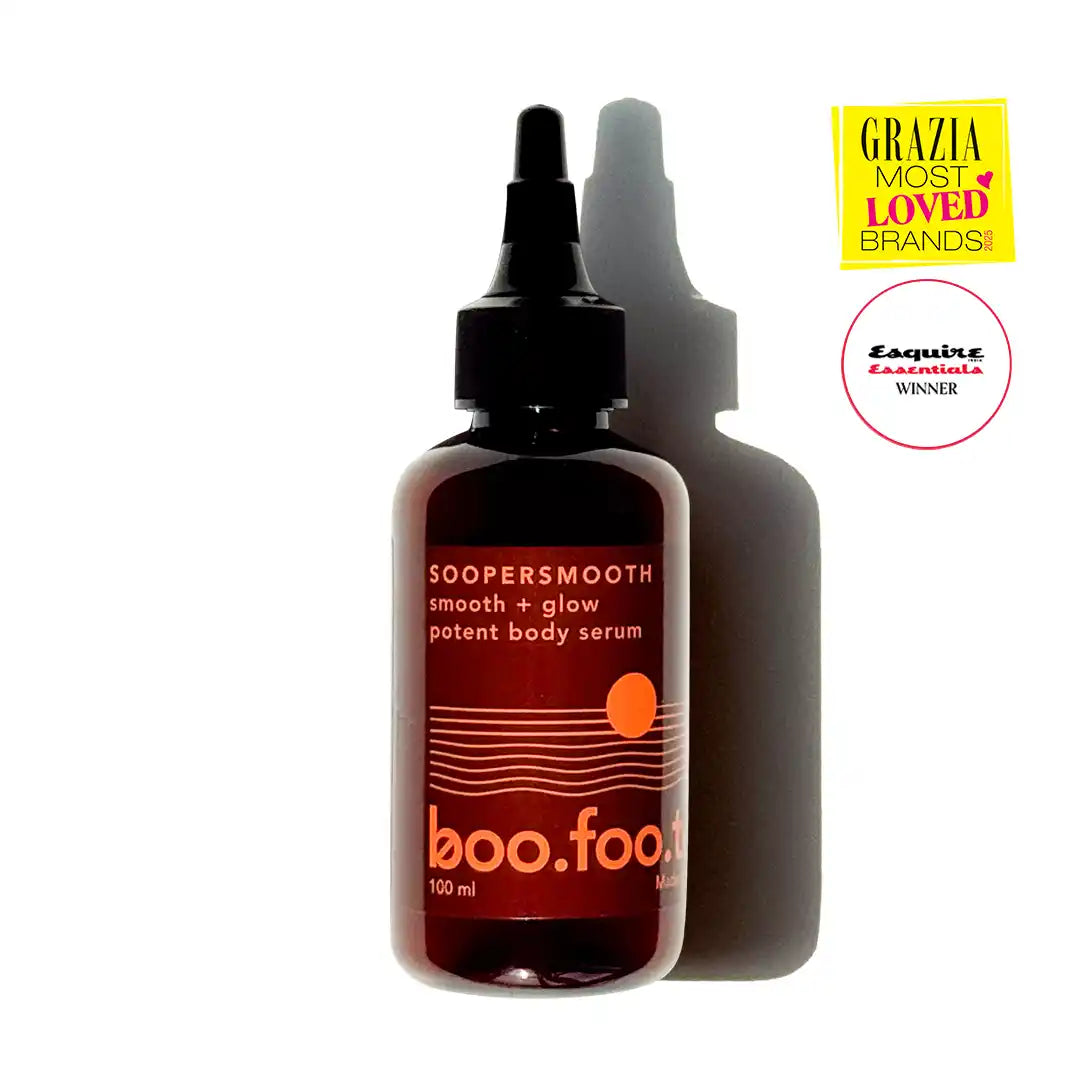
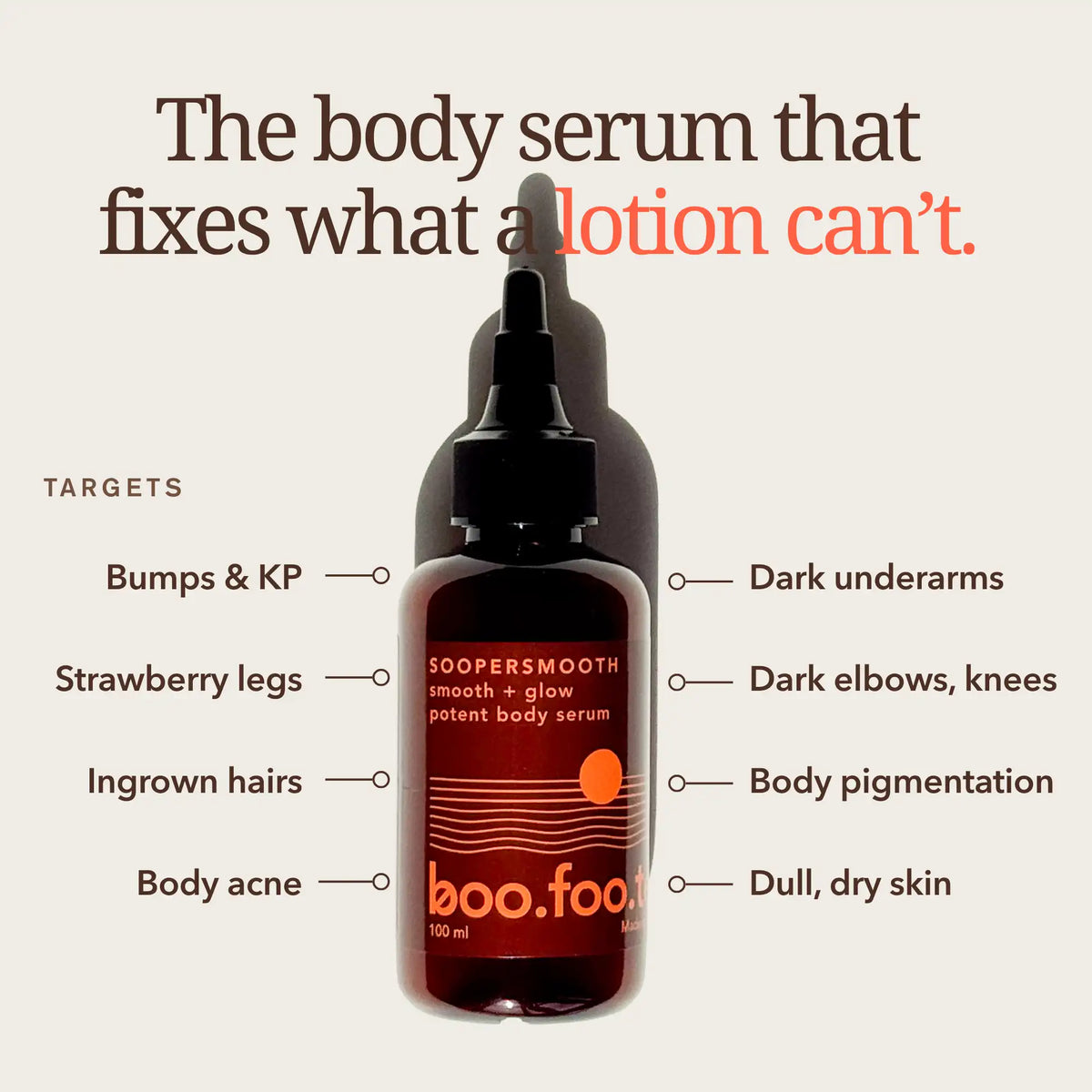
SOOPERSMOOTH Body Serum
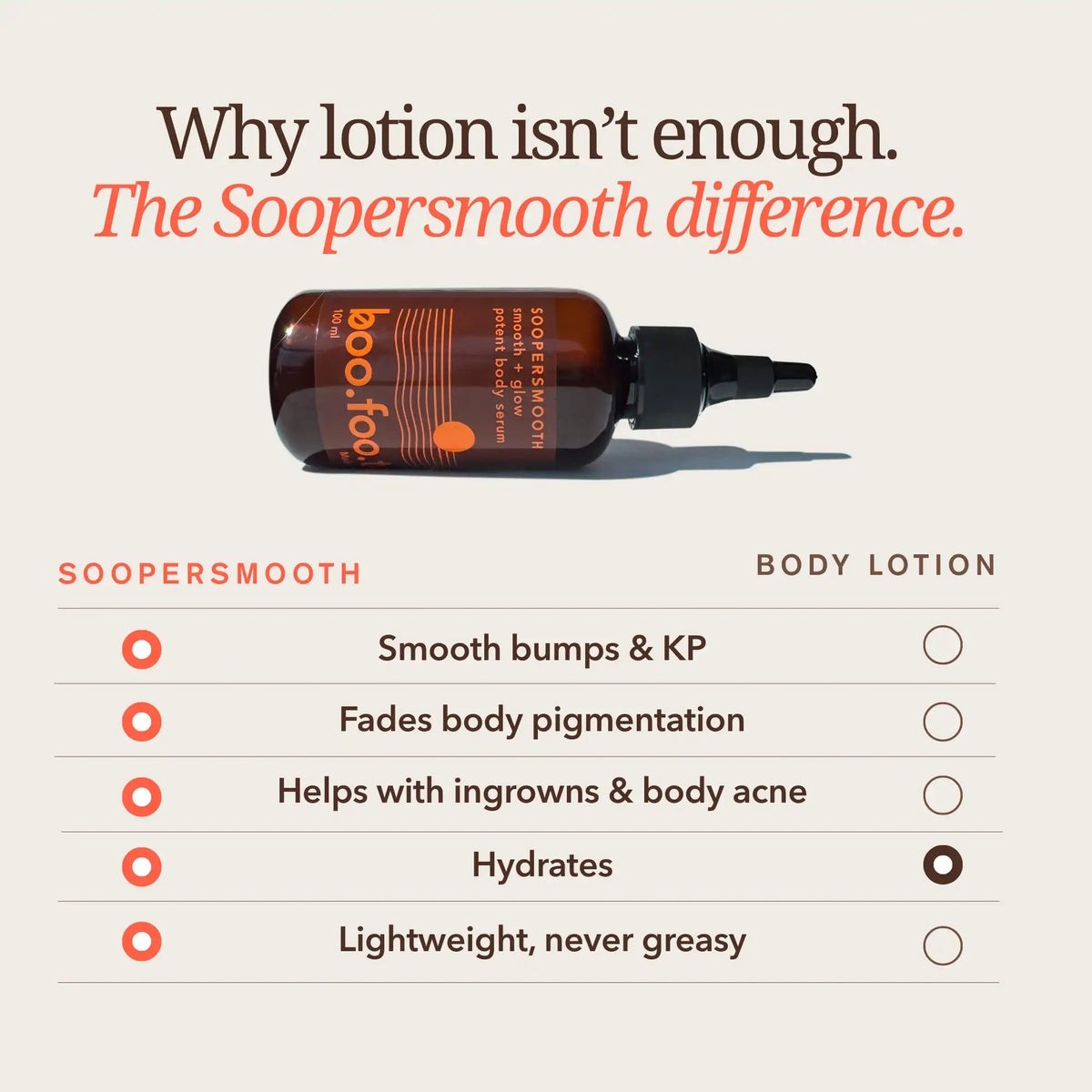
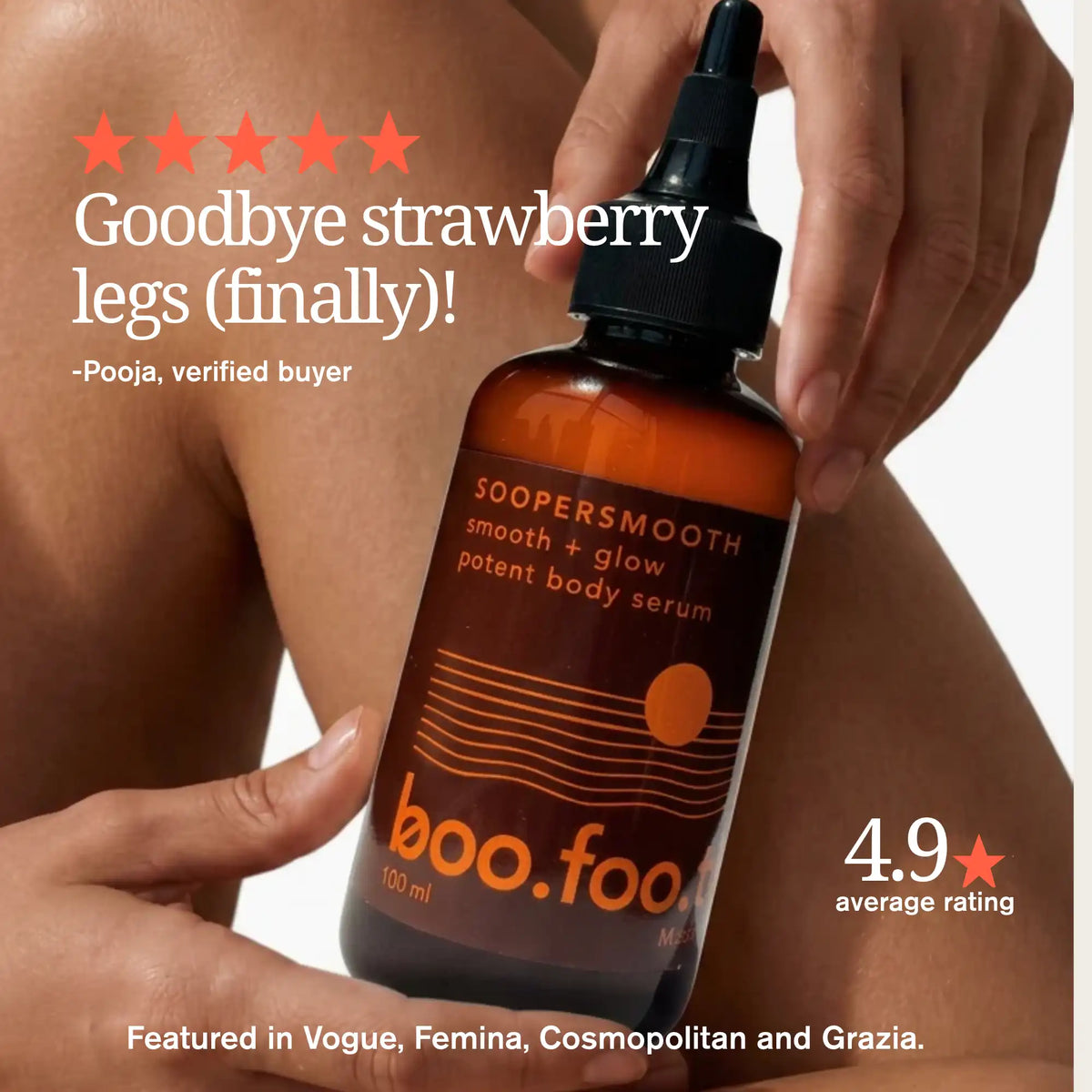
I'm a light (never greasy!) serum for your body that polishes, smooths and brightens rough, bumpy skin. Great for problem areas like elbows, knees and bum!
- Regular price
-
₹1,450 - Regular price
-
- Sale price
-
₹1,450
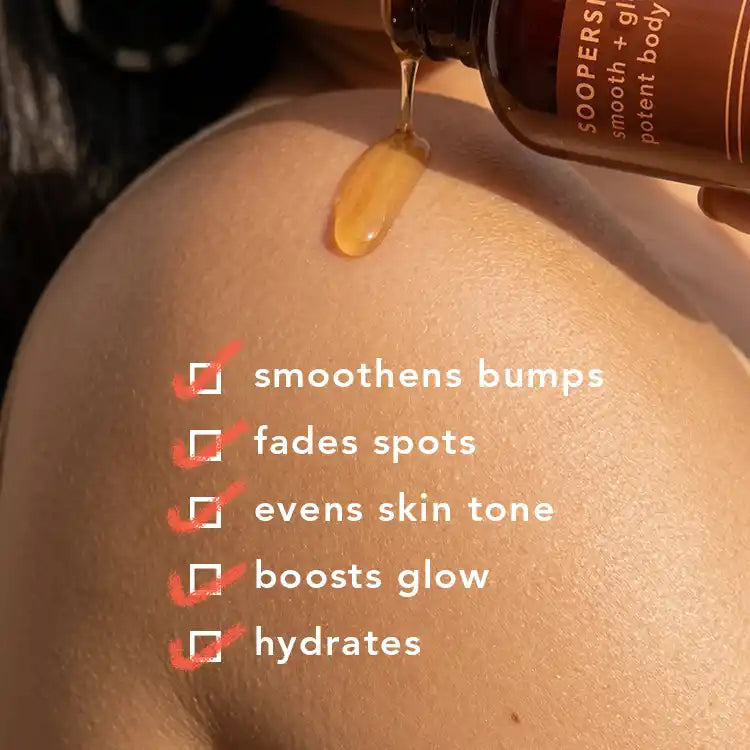
MY BENEFITS
-
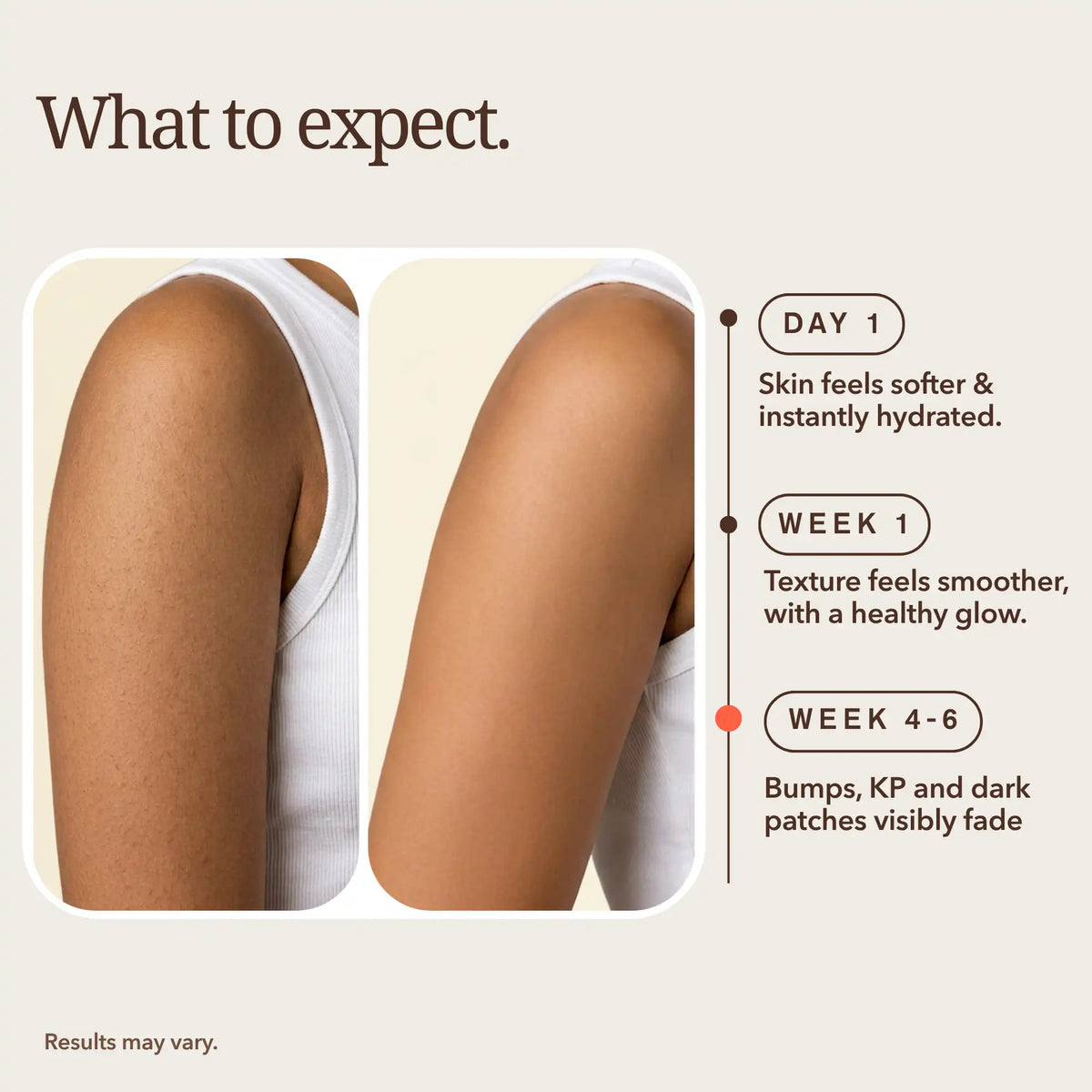
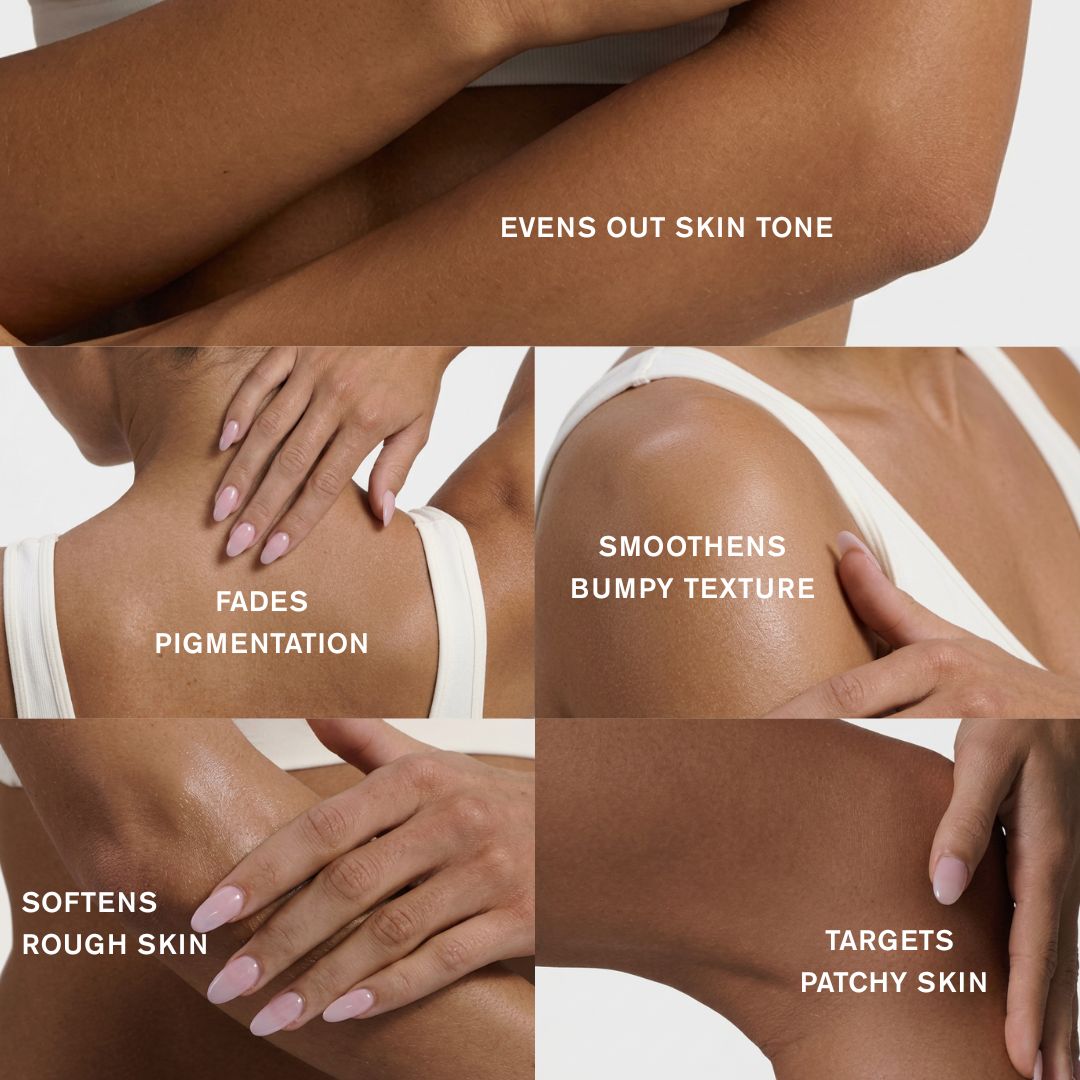
Smoothens bumpy texture
- Fades dark spots + pigmentation
- Evens out patchy skin (knees, elbows, neck, underarms)
-
Boosts glow
- Weightless hydration
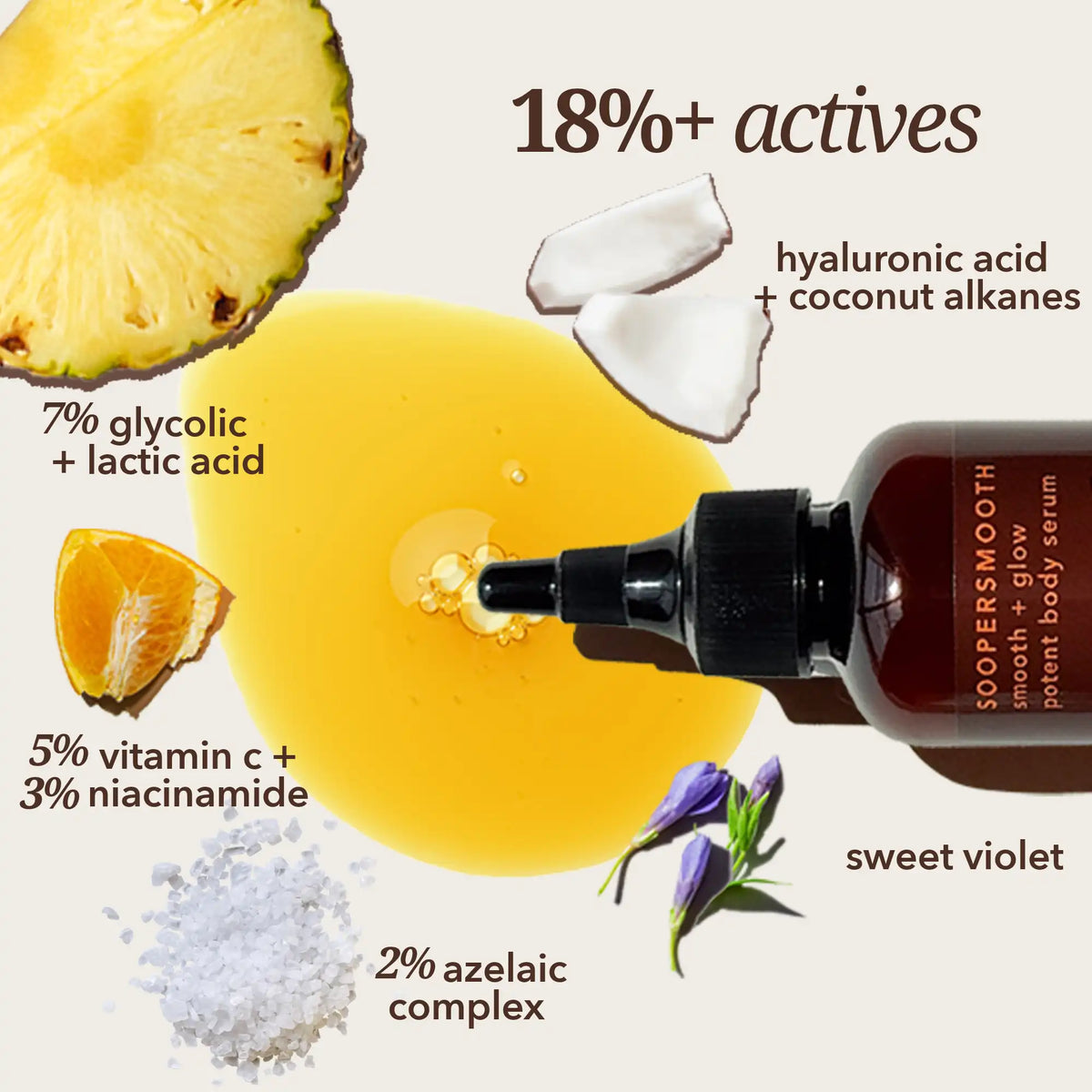
My Hero Ingredients
Glycolic acid + Lactic acid
polish and smoothen rough, bumpy skin
Vitamin C + Niacinamide
brighten and even out skin tone
Hyaluronic acid + Sweet Violet Extract
hydrate and nourish skin
How To Use Me
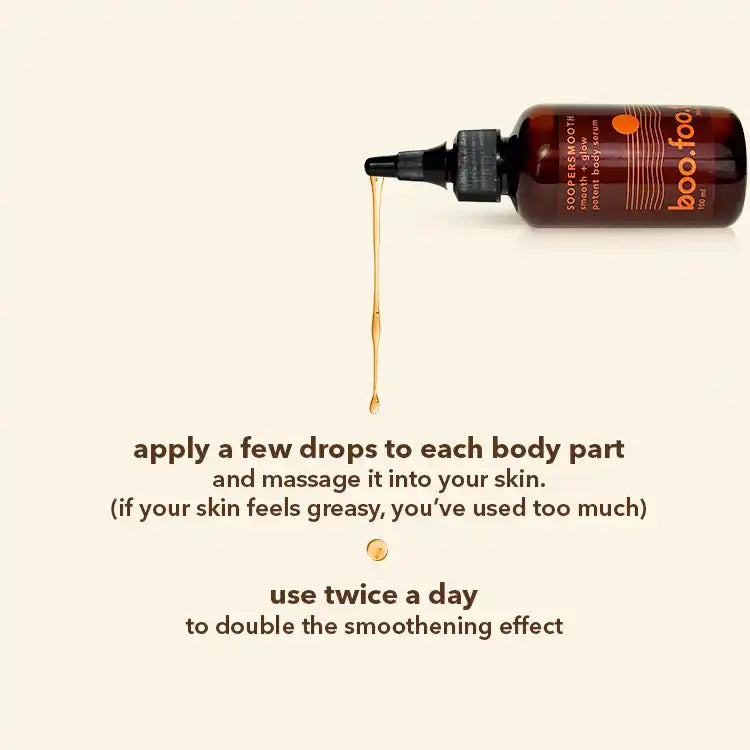
Shake the bottle well to mix the two phases. Then massage me all over your body*, paying extra attention on problem areas.
My silky-light texture sinks into your skin within minutes, so you won't even know I'm there!
My smoothening effect is doubled when I'm used twice a day - morning and evening.
It's always a good idea to follow me up with a sunscreen during the day.
*I'm made specifically for your body, so don't use me on your face.


Why Glycolic Acid Works
Glycolic acid is an alpha hydroxy acid, or AHA, used in skincare to chemically exfoliate the surface of the skin.
Instead of physically rubbing dead skin away with a scrub, glycolic acid helps loosen the connections between dead surface skin cells so they can shed more easily.
This can make skin feel smoother and look brighter while reducing the build-up that contributes to roughness and uneven texture.
Glycolic acid has the smallest molecular size of the commonly used AHAs, which allows it to penetrate skin readily. That is part of what makes it effective — but also why using too much, too often can irritate some skin.
The goal with glycolic acid is not maximum exfoliation.
It is effective exfoliation without unnecessary irritation.
Body skin has its own set of problems.
Dead skin and keratin can build up around hair follicles. Shaving and waxing can leave the skin rough or irritated. Friction can make knees, elbows, thighs and underarms feel thicker. And the marks left behind after inflammation can remain visible long after the original bump has disappeared.
That is why glycolic acid can be particularly useful for concerns such as:
- rough arms and legs
- bumpy skin
- keratosis pilaris or chicken skin
- strawberry legs
- ingrown-hair marks
- dark knees and elbows
- uneven body texture
- dull or patchy body skin
By exfoliating the outermost layers of dead skin, glycolic acid tackles the texture and surface build-up behind many of these concerns.
But if pigmentation is involved too, exfoliation alone may not be enough. Combining glycolic acid with ingredients that target uneven pigment and support hydration can address more than one part of the problem.
Yes — but restraint matters.
Indian skin includes an enormous range of tones and skin types. Many melanin-rich skin tones are also more prone to post-inflammatory hyperpigmentation, where irritation, acne, shaving, waxing, friction or picking leaves a dark mark behind.
Glycolic acid can be useful because it helps remove pigmented surface cells and improve uneven texture.
But there is an important catch.
Too much exfoliation can cause inflammation. And inflammation can trigger more pigmentation.
That means aggressively using several acids, scrubbing alongside glycolic acid or constantly chasing stronger percentages can be counterproductive for pigmentation-prone skin.
For Indian skin, effective exfoliation should be consistent rather than aggressive.
Smooth the skin without repeatedly upsetting it.
Keratosis pilaris — often called KP or chicken skin — happens when keratin collects around the opening of a hair follicle, creating tiny rough bumps.
It commonly appears on the upper arms, thighs and bum.
Glycolic acid acts as a keratolytic exfoliant, helping loosen excess dead skin and keratin at the surface so the area can gradually feel smoother.
That is why AHAs such as glycolic and lactic acid are commonly used in skincare for keratosis pilaris.
But KP is usually something you manage rather than permanently cure.
Consistent exfoliation and hydration can significantly improve the texture, while stopping completely may allow the rough build-up to gradually return.
And scrubbing harder is not the answer. Repeated friction can make the area more irritated — and make the dark marks surrounding the bumps more noticeable.
It can — especially when dead-skin build-up is part of the problem.
Strawberry legs describes the appearance of small dark dots around hair follicles, usually on the legs. They may be caused by visible follicles, keratin build-up, shaving irritation, ingrown hairs or a combination of several things.
Ingrown hairs occur when a hair grows sideways or curls back into the skin instead of growing freely outward.
Glycolic acid helps exfoliate the dead surface skin around the follicle opening. Keeping this area smoother may make it easier for hairs to emerge normally and can reduce some of the build-up associated with ingrown-prone skin.
It can also help improve the appearance of the dark marks that remain after an ingrown hair has healed.
But glycolic acid cannot prevent every ingrown hair. Hair type, shaving technique, waxing, friction and inflammation all play a role.
Think of glycolic acid as part of an ingrown-hair routine, rather than a magic cure.
Yes — when surface build-up, friction or post-inflammatory pigmentation is contributing to the darkness.
Areas such as the underarms, knees and elbows experience frequent friction and can accumulate dry, rough surface skin.
Glycolic acid helps exfoliate this build-up, which can make the area appear smoother, brighter and more even over time.
But dark body patches are not always caused by dead skin.
Underarm pigmentation, for example, can also be triggered by shaving, waxing, ingrown hairs, deodorant irritation and friction. That is why glycolic acid often works better as part of a formula containing complementary ingredients such as Vitamin C and niacinamide rather than being expected to address every cause alone.
And darker skin on the underarms or neck that becomes thick or velvety should be assessed by a healthcare professional, because it can sometimes have an underlying medical cause.
Skincare treats cosmetic pigmentation. It cannot treat an underlying condition.
They all exfoliate, but they do not behave in exactly the same way.
Glycolic Acid — AHA. Best known for surface exfoliation. Particularly useful when rough texture, dullness, keratin build-up and uneven pigmentation are concerns.
Lactic Acid — AHA. Also exfoliates the surface, but has a larger molecular size and is generally considered gentler than glycolic acid. It also has humectant properties, making it particularly useful when rough skin is also dry or dehydrated.
Salicylic Acid — BHA. Oil-soluble and particularly useful for oily or clogged follicles because it can work within oily environments more effectively than water-soluble AHAs.
So which is best?
It depends on the problem.
For rough, bumpy, pigmented body skin, glycolic and lactic acid make a useful combination because they both work on surface build-up while behaving slightly differently.
For very oily or acne-prone follicles, salicylic acid may have advantages.
There is no rule that says one acid has to do everything.
The percentage matters — but it does not tell you everything.
Two products that both say “7% glycolic acid” on the label can behave differently because the performance of an acid also depends on factors including the pH and complete formulation.
The lower the pH, the greater the proportion of glycolic acid that can exist in its free-acid form. That can affect how strongly a product behaves on skin.
This is why simply buying the product with the highest glycolic-acid percentage is not a good strategy.
Higher concentrations can also increase the risk of dryness, stinging and irritation.
Boofootel uses 7% glycolic acid in Soopersmooth Body Serum as part of a multi-active formula rather than relying on glycolic acid alone.
It is combined with lactic acid, Vitamin C, niacinamide and hydrating ingredients so the formula addresses texture, pigmentation and hydration together.
The best strength is the one that gives your skin meaningful exfoliation while remaining comfortable enough to use consistently.
Glycolic acid is particularly useful when paired with ingredients that do jobs it cannot do alone.
Glycolic Acid + Lactic Acid. Both are AHAs, but lactic acid provides gentler exfoliation and additional humectant properties. Together they can target rough, dry and bumpy body texture.
Glycolic Acid + Niacinamide. Glycolic acid tackles surface build-up while niacinamide supports the skin barrier and helps improve uneven pigmentation.
Glycolic Acid + Vitamin C. A useful combination when rough texture and dark patches occur together. Glycolic acid exfoliates while Vitamin C targets uneven pigmentation through a different pathway.
Glycolic Acid + Hyaluronic Acid. Hyaluronic acid provides lightweight hydration alongside exfoliation, particularly useful when acids leave skin feeling dry.
Glycolic Acid + Retinoids. Both can be effective skincare actives, but layering separate strong glycolic-acid and retinoid products at the same time can be too irritating for some skin.
More actives at once does not automatically mean better skin.
The warning signs of too much exfoliation are not signs that glycolic acid is “working harder”.
Watch for:
- persistent stinging
- redness
- unusual tightness
- flaking
- tenderness
- increased sensitivity
- skin that suddenly feels shiny, raw or uncomfortable
- pigmentation becoming worse rather than better
If this happens, reduce or stop your exfoliating products and give the skin barrier time to recover.
Do not combine several strong exfoliating acids simply because each product works well individually.
Avoid applying glycolic acid over cuts, broken skin or freshly irritated areas.
And be careful around hair removal.
Shaving and waxing temporarily disturb the skin surface, so applying an acid immediately afterwards can sting and increase irritation. Wait until the skin feels completely calm again before restarting your exfoliating product.
Most importantly, protect exposed skin from the sun. AHAs can increase UV sensitivity, so sunscreen matters on exposed areas such as the arms, legs, hands and neck.
FAQs about Glycolic Acid
Yes.
Glycolic acid exfoliates dead surface skin and can help loosen the build-up associated with rough, uneven texture.
It is particularly useful when bumps are linked to keratin build-up, such as keratosis pilaris.
It can.
Glycolic acid helps exfoliate dead skin around the hair follicles, which can improve rough texture and make some of the dark dots associated with strawberry legs less noticeable.
The best approach depends on whether the dots are caused by keratosis pilaris, ingrown hairs, shaving irritation or visible follicles.
Glycolic acid can help keep the skin around hair follicles smoother by reducing dead-skin build-up.
This may help hairs emerge more freely and can also improve marks left behind after previous ingrown hairs.
Hair-removal technique still matters, so exfoliation alone will not prevent every ingrown.
Glycolic acid does not bleach your natural skin colour.
It can make skin appear brighter and more even by removing dull surface cells and helping excess surface pigmentation fade over time.
The goal is to return uneven areas closer to your natural skin tone — not make your skin a different colour.
Glycolic acid can help improve the appearance of uneven tanning by exfoliating pigmented surface skin cells as they naturally turn over.
It cannot instantly remove a tan.
And exfoliating without protecting the skin from further UV exposure makes very little sense. Use sunscreen on exposed skin while using AHAs.
Yes, provided the product is suitable for body use and the skin is not irritated.
Glycolic acid can help when dead-skin build-up and post-inflammatory pigmentation contribute to dark underarms.
Because underarm skin experiences shaving, waxing and friction, avoid applying strong exfoliating products immediately after hair removal.
No.
Glycolic acid has become popular online as an underarm “deodorant hack”, but it is not an antiperspirant and does not stop sweat.
Some people may notice a change in odour when using acidic products on their underarms, but glycolic acid should not be treated as a guaranteed replacement for a properly formulated deodorant.
Use glycolic acid for the skin concern it is designed to address — exfoliation — and use a separate deodorant or antiperspirant if you need odour or sweat control.
That depends on the concentration, formulation, area of the body and your skin’s tolerance.
Some glycolic-acid products are designed for regular use, while stronger formulas are intended less frequently.
Always follow the directions for the specific product rather than applying a universal “glycolic acid rule”.
More frequent exfoliation does not necessarily mean faster results.
Not immediately.
Shaving and waxing can leave the skin temporarily more sensitive. Applying glycolic acid straight afterwards can sting or trigger unnecessary irritation.
Wait until the skin feels completely calm and there are no cuts, redness or sensitivity before applying your glycolic-acid product again.
Some sensitive skin can tolerate glycolic acid, but it may not be the best AHA for everyone.
Start gradually, patch test and avoid combining several exfoliating products at once.
If glycolic acid repeatedly causes irritation, a gentler exfoliant such as lactic acid may suit your skin better.
Yes. Alpha hydroxy acids can temporarily increase the skin's sensitivity to ultraviolet light.
Use sunscreen and protective clothing on areas exposed to daylight while using glycolic acid.
This matters particularly when pigmentation is one of the reasons you are exfoliating in the first place.


