


For rough, dry, bumpy skin + uneven tone.
Lactic acid is an alpha hydroxy acid (AHA) that does two useful things at once: gently exfoliates dead surface skin while helping support hydration.
That makes it particularly useful when skin is rough, bumpy, dull or dry as well as uneven.

Benefits
- Gently exfoliates dead surface skin
- Smooths rough + bumpy texture
- Helps fade uneven pigmentation + dark marks
- Brightens dull-looking skin
- Helps improve keratin build-up around follicles
- Hydrates dry, rough skin
Get the benefits of Lactic Acid
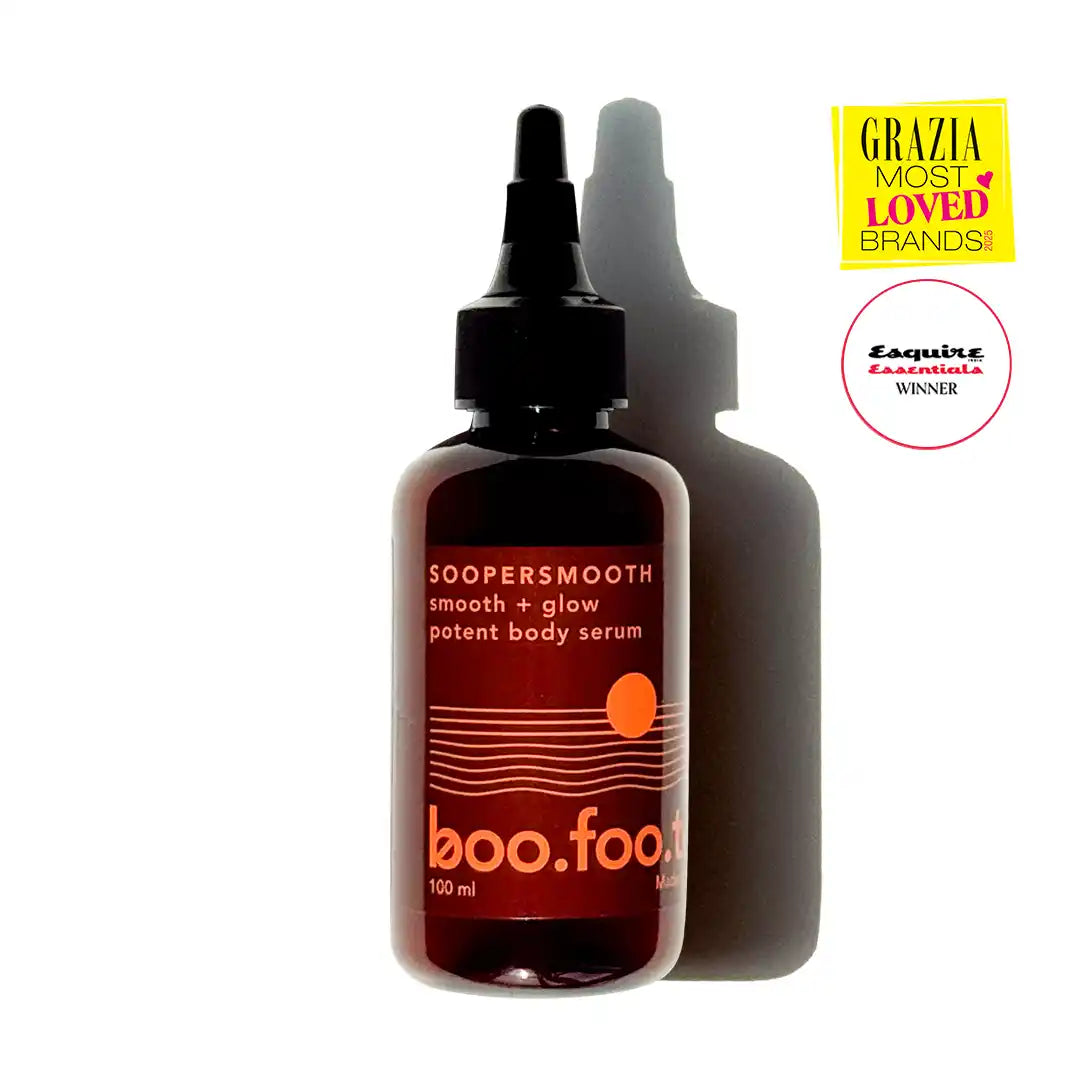
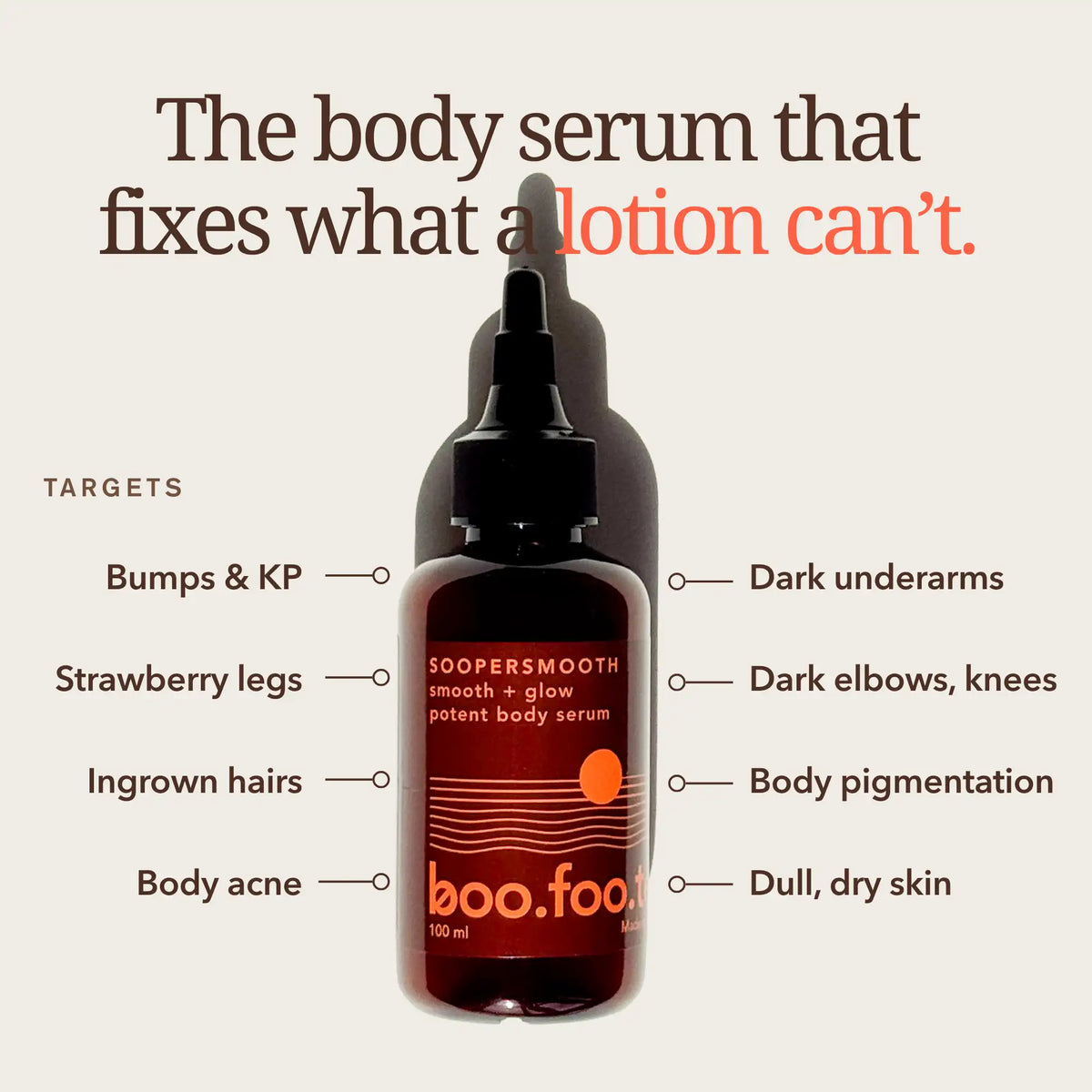

SOOPERSMOOTH Body Serum
I'm a light (never greasy!) serum for your body that polishes, smooths and brightens rough, bumpy skin. Great for problem areas like elbows, knees and bum!
- Regular price
-
₹1,450 - Regular price
-
- Sale price
-
₹1,450
My Key Benefits
-
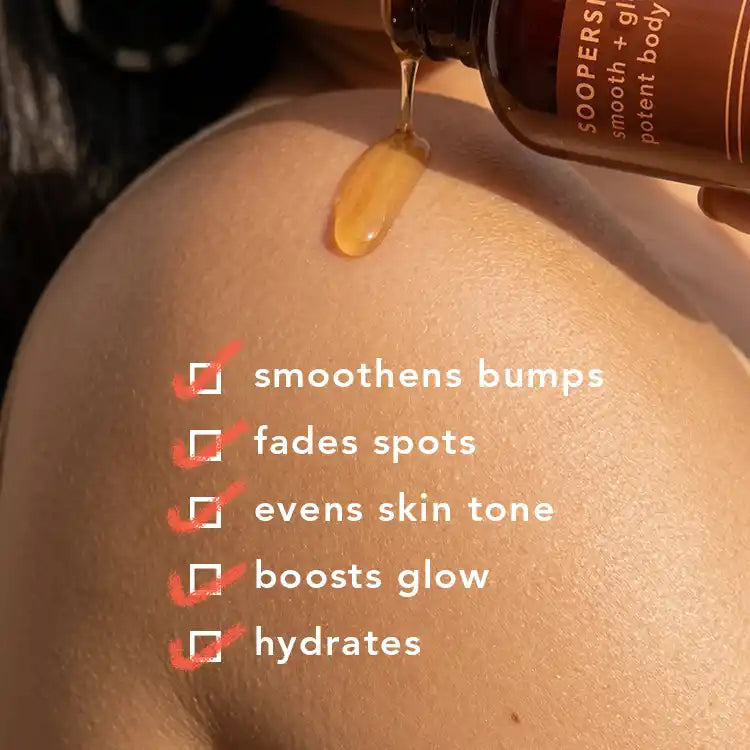
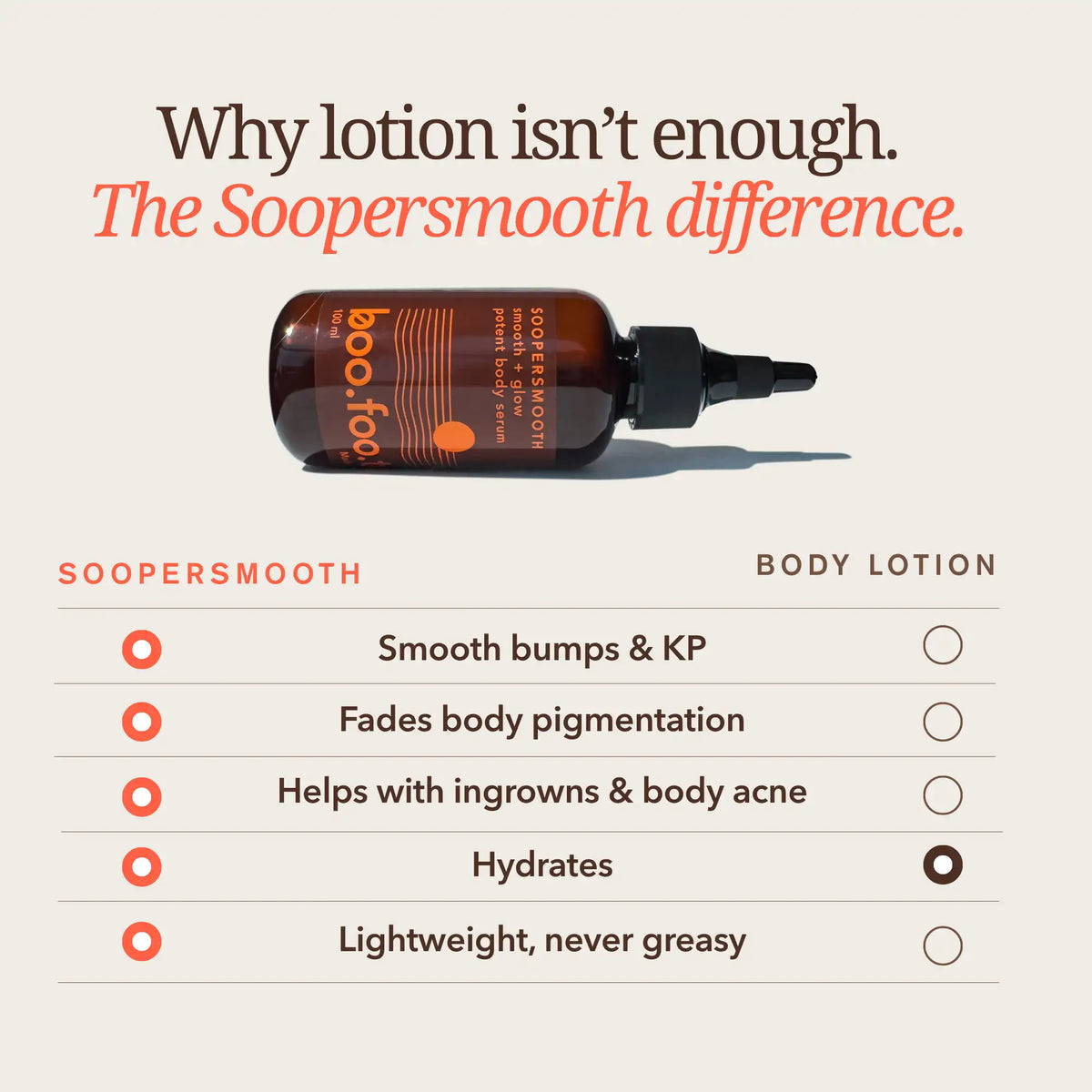
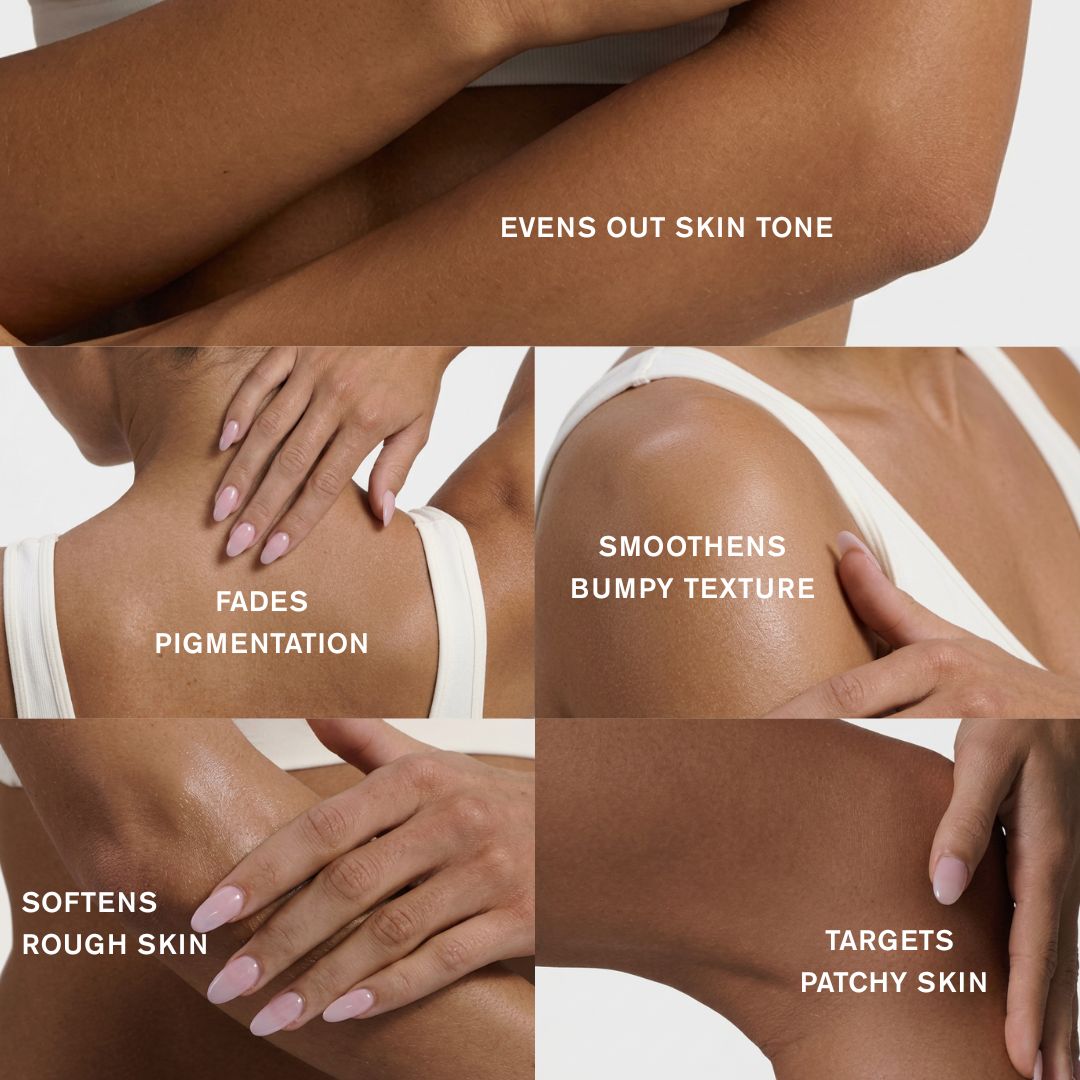
Smoothens bumpy texture
- Fades dark spots + pigmentation
- Evens out patchy skin (knees, elbows, neck, underarms)
-
Boosts glow
- Weightless hydration
MY HERO INGREDIENTS
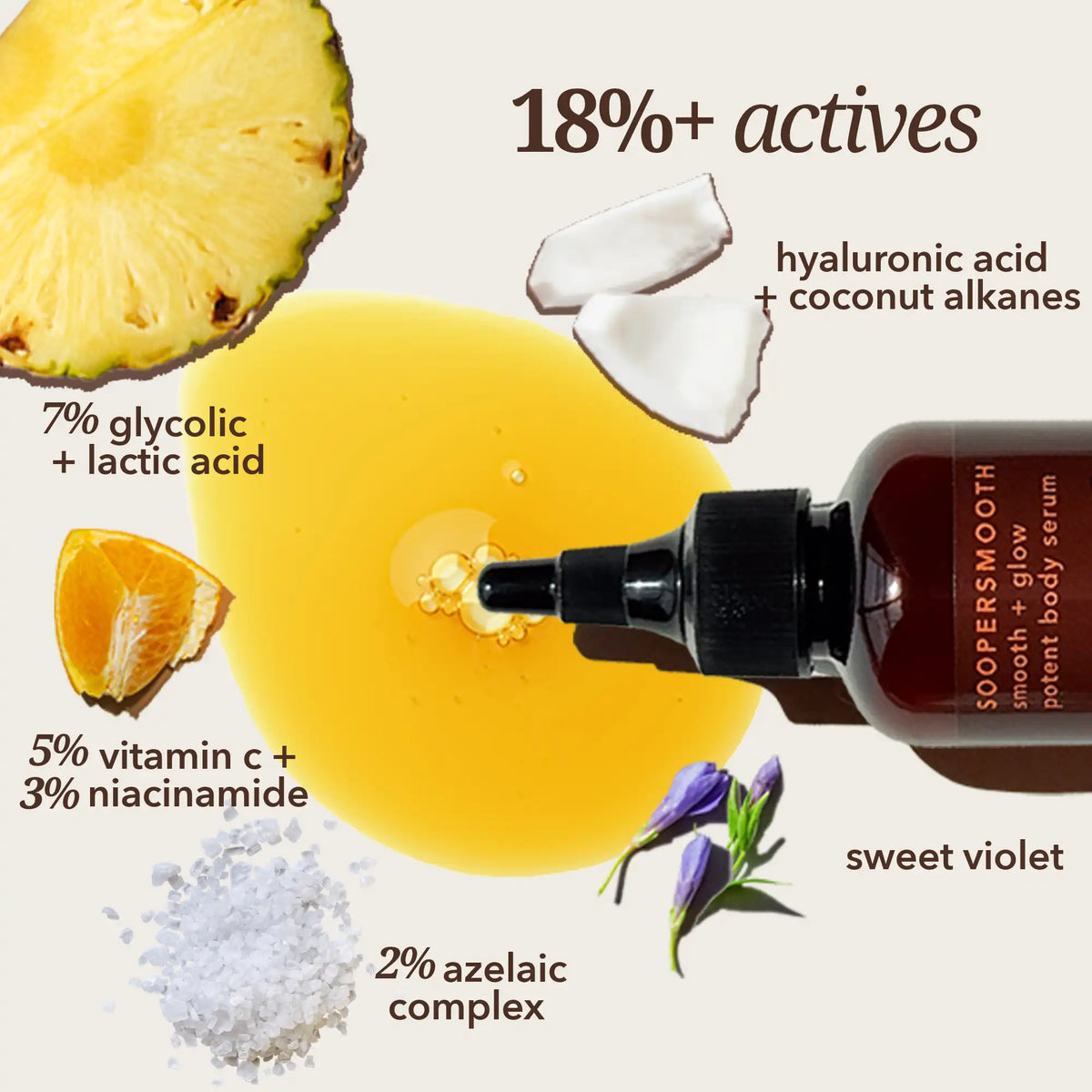
Glycolic acid + Lactic acid
polish and smoothen rough, bumpy skin
Vitamin C + Niacinamide
brighten and even out skin tone
Hyaluronic acid + Sweet Violet Extract
hydrate and nourish skin
HOW TO USE ME
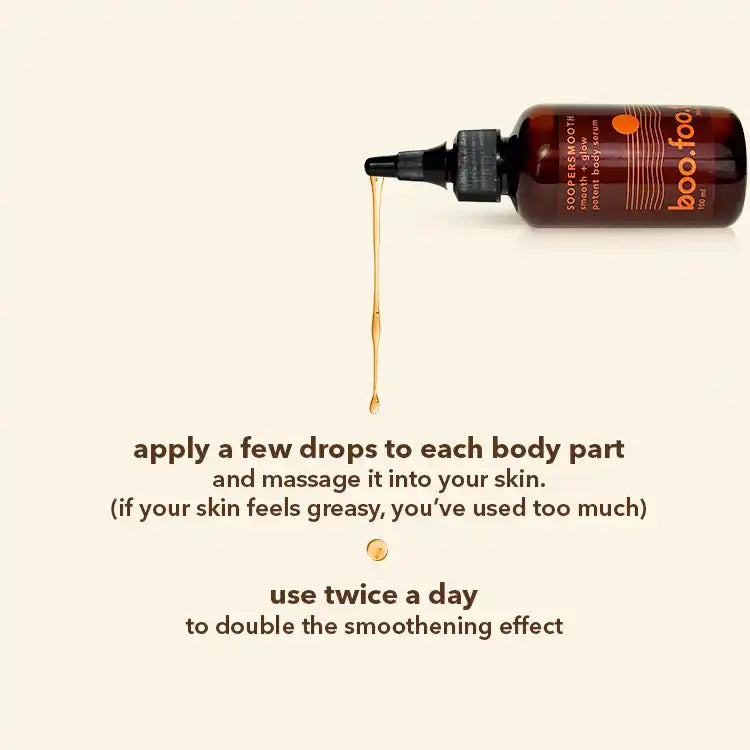
Shake the bottle well to mix the two phases. Then massage me all over your body*, paying extra attention on problem areas.
My silky-light texture sinks into your skin within minutes, so you won't even know I'm there!
My smoothening effect is doubled when I'm used twice a day - morning and evening.
It's always a good idea to follow me up with a sunscreen during the day.
*I'm made specifically for your body, so don't use me on your face.

Why Lactic Acid is different
Lactic acid is an alpha hydroxy acid, or AHA, used in skincare to exfoliate the surface of the skin.
It works by helping loosen the bonds between dead surface skin cells so they can shed more easily.
This can gradually improve:
- rough texture
- dullness
- bumpy skin
- uneven tone
- dry, flaky build-up
- the appearance of some surface pigmentation
But lactic acid has another useful property.
Unlike many ingredients used primarily for exfoliation, lactic acid and lactate also have humectant properties, meaning they can help support water content within the outer layers of the skin.
So lactic acid does not have to be thought of as simply an acid that “strips away” dead skin.
Used in an appropriate formula, it can help exfoliate and hydrate at the same time.
This is what makes lactic acid interesting.
As an AHA, lactic acid helps encourage the shedding of dead surface skin cells. This improves roughness, flaking and uneven texture.
At the same time, lactate is naturally present within the skin’s Natural Moisturising Factor (NMF) — the collection of water-binding substances that helps the outermost layer of skin stay hydrated and flexible.
Lactic acid and its salts can therefore contribute to water binding within the stratum corneum.
That combination makes lactic acid especially useful when the problem is not simply:
“My skin is bumpy.”
but:
“My skin is bumpy + dry + rough.”
This is also why lactic acid is commonly found in body products designed for dry, scaly or keratinised skin.
Exfoliation does not always have to mean drying the skin out.
It can be an excellent option — particularly when pigmentation and rough texture occur together.
Indian skin includes many different tones and skin types, so there is no single ingredient that is automatically “best for Indian skin”.
But many melanin-rich skin tones are more prone to post-inflammatory hyperpigmentation, where irritation leaves behind a persistent dark mark.
That makes the way you exfoliate especially important.
Over-exfoliating, scrubbing aggressively or repeatedly irritating the skin can create inflammation — and inflammation can make pigmentation worse.
Lactic acid has a larger molecular size than glycolic acid and generally penetrates the skin more slowly, which is one reason it is often considered the gentler of the two AHAs.
That does not mean lactic acid can never irritate skin.
Concentration, pH, frequency and the complete formulation still matter.
For pigmentation-prone skin, the goal is not the strongest exfoliation possible.
It is enough exfoliation to improve texture without constantly upsetting the skin.
Keratosis pilaris, often called KP or chicken skin, happens when keratin accumulates around the opening of a hair follicle.
The result is the familiar tiny, rough bumps commonly seen on the:
- upper arms
- thighs
- legs
- bum
Lactic acid acts as a keratolytic exfoliant, helping loosen excess dead skin and keratin at the surface.
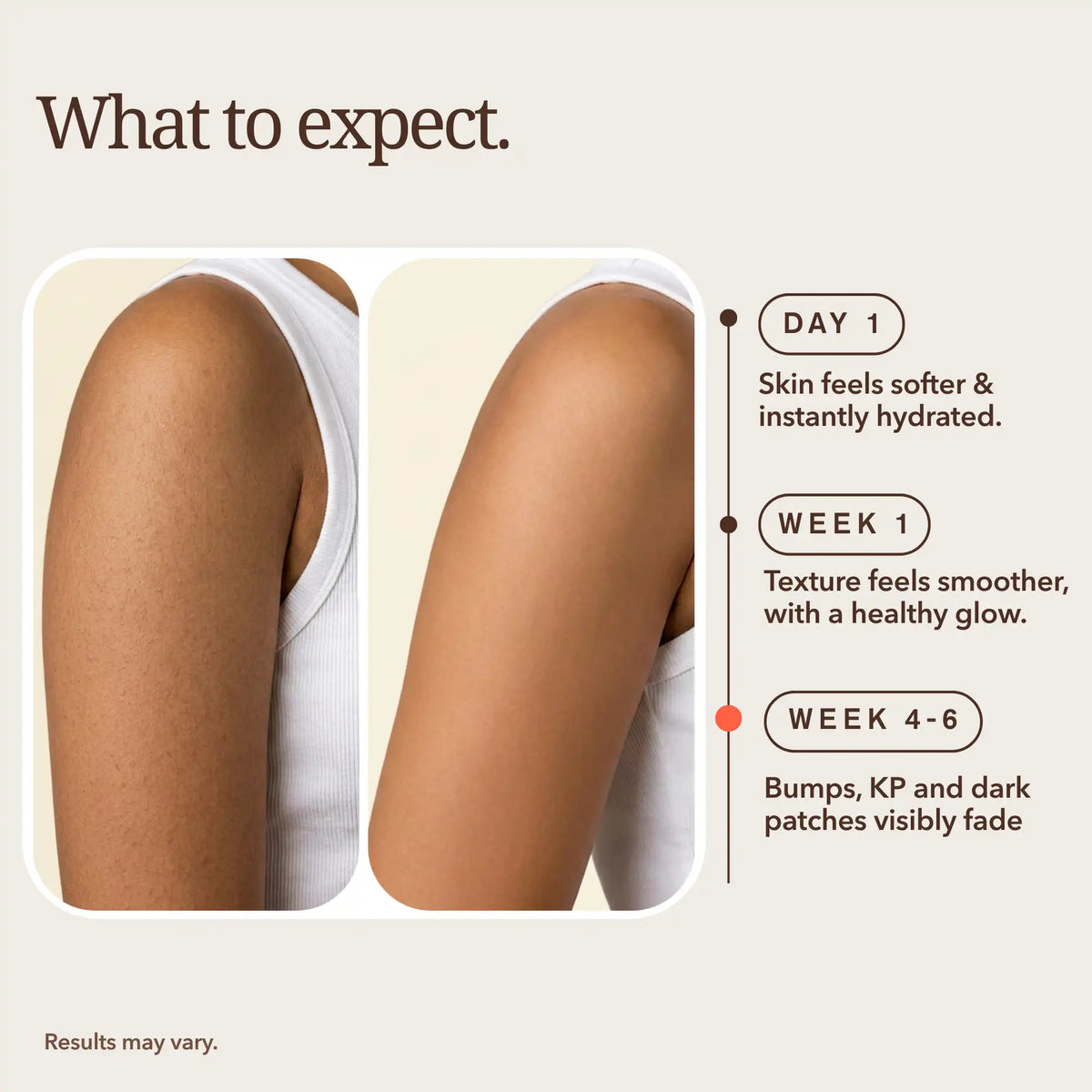
This can gradually make the bumps feel flatter and the surrounding skin feel smoother.
Lactic acid is especially useful when KP occurs alongside dryness, because it offers both exfoliating and hydrating properties.
Clinical research and systematic reviews of keratosis pilaris treatments include lactic acid among the commonly used topical options.
But KP is generally something you manage rather than permanently cure.
Consistency matters more than attacking the bumps with aggressive scrubs or increasingly strong acids.
It can help with some of the factors that contribute to them.
Strawberry legs describes the dark dotted appearance of hair follicles, particularly on the legs.
Those dots may be associated with:
- keratin build-up
- clogged follicles
- shaving
- ingrown hairs
- post-inflammatory pigmentation
- visible hair follicles
Lactic acid helps remove excess dead surface skin around the follicle openings and can gradually smooth rough texture.
That can also be useful for ingrown-prone skin, because accumulated dead skin can make it harder for newly growing hairs to emerge cleanly through the surface.
Lactic acid may also help improve the appearance of dark marks left behind after an ingrown hair has healed.
But it cannot prevent every ingrown hair.
Hair type, shaving technique, waxing, friction and inflammation all affect how frequently ingrowns develop.
Yes — particularly when the pigmentation is close to the skin surface or occurs alongside dead-skin build-up.
By encouraging dead surface cells to shed, lactic acid can gradually help remove some of the pigmented cells that contribute to an uneven appearance.
This can make it useful for:
- post-inflammatory dark marks
- patchy body pigmentation
- marks left after ingrown hairs
- dark knees and elbows
- uneven underarms
- dull, uneven body skin
But lactic acid does not directly target every pigment pathway.
That is why it often makes sense to combine exfoliation with ingredients such as Vitamin C and niacinamide, which work on uneven pigmentation through different mechanisms.
And more exfoliation does not necessarily mean faster fading.
If strong or frequent acid use irritates pigmentation-prone skin, that inflammation can create new post-inflammatory pigmentation.
Both are alpha hydroxy acids.
But they are not identical.
Glycolic Acid
Glycolic acid has a smaller molecular size and can penetrate skin readily.
It is particularly useful when you want more active surface exfoliation for:
- rough texture
- keratin build-up
- bumps
- dullness
- pigmentation
Lactic Acid
Lactic acid has a larger molecular size and generally penetrates more slowly.
It exfoliates too, but it also has useful humectant properties.
That makes it particularly appealing when skin is:
- rough
- bumpy
- dry
- flaky
- easily over-exfoliated
So which is better?
Neither automatically.
If your main concern is stubborn surface texture and build-up, glycolic acid may provide stronger exfoliation.
If your skin is rough and dry, or you want gentler exfoliation with hydration support, lactic acid may be particularly useful.
And they can also be used together in a properly formulated product.
They do not need to compete.
There is no universally perfect percentage.
The number on the ingredient label tells you only part of the story.
How strongly an AHA behaves also depends on:
- the concentration
- the formula’s pH
- the other ingredients in the formula
- where it is being used
- how frequently it is applied
- your own skin tolerance
A stronger percentage is therefore not automatically a better product.
Higher-strength acid formulas can increase the chance of stinging, dryness and irritation.
That matters particularly if your skin develops pigmentation after inflammation.
The better question is:
Does this formulation provide enough exfoliation to improve my skin while remaining comfortable enough to use consistently?
For acids, consistency usually wins over aggression.
Lactic acid works particularly well in formulas where other ingredients address concerns exfoliation cannot solve by itself.
Lactic Acid + Glycolic Acid. Both exfoliate, but glycolic acid penetrates more readily while lactic acid provides gentler exfoliation and additional humectant properties. Together they can target stubborn rough and bumpy texture.
Lactic Acid + Niacinamide. Lactic acid tackles dead surface build-up while niacinamide supports the skin barrier and helps improve uneven pigmentation.
Lactic Acid + Vitamin C. Useful when roughness and dark marks occur together. Lactic acid exfoliates surface build-up while Vitamin C helps target uneven pigmentation through a different pathway.
Lactic Acid + Hyaluronic Acid. A strong combination for rough skin that also feels dehydrated. Lactic acid exfoliates while hyaluronic acid provides additional water-binding hydration.
Lactic Acid + Retinoids. Both can belong in the same overall skincare routine, but layering separate strong acid and retinoid products at the same time may irritate some skin.
You do not need every active in every step.
A thoughtful formula is more useful than the longest ingredient routine.
Lactic acid may be gentler than glycolic acid in many formulations, but it is still an exfoliating acid.
Pay attention to your skin.
Signs you may be exfoliating too much include:
- persistent stinging
- redness
- burning
- flaking
- unusual tightness
- tenderness
- increased sensitivity
- worsening pigmentation
If this happens, reduce or stop exfoliating products and give your skin time to recover.
Also be careful around shaving and waxing.
Hair removal can temporarily irritate the skin, so applying an exfoliating acid immediately afterwards may sting and increase inflammation.
Wait until the skin feels completely calm before applying it again.
And remember that alpha hydroxy acids can increase sensitivity to ultraviolet light.
Use sunscreen and protective clothing on areas exposed to the sun while using AHAs.
FAQs about Lactic Acid
Yes.
Lactic acid exfoliates excess dead surface skin and can help smooth rough, uneven texture.
It is particularly useful when bumpy skin also feels dry because lactic acid has both exfoliating and humectant properties.
Yes.
Lactic acid is commonly used as a topical keratolytic for keratosis pilaris because it helps loosen the keratin and dead-skin build-up responsible for the rough bumps.
Consistent use is generally more useful than harsh physical scrubbing.
Generally, yes — but the formulation matters.
Lactic acid has a larger molecular size than glycolic acid and usually penetrates more slowly.
However, a strong low-pH lactic-acid peel could still be more irritating than a mild glycolic-acid product.
Do not judge gentleness from the ingredient name alone.
Some sensitive skin tolerates lactic acid well, particularly compared with more aggressive exfoliating routines.
But “gentler” does not mean irritation-proof.
Patch test, follow the product directions and avoid layering several exfoliating products if your skin is reactive.
Yes, if ordinary surface build-up and post-inflammatory pigmentation are contributing to the darkness.
Lactic acid can gently exfoliate rough underarm skin while also providing hydration support.
Avoid applying exfoliating acids to freshly shaved, waxed or irritated underarms.
Yes.
Knees and elbows naturally experience more friction and often develop thicker, drier surface skin.
Lactic acid can help loosen this dead-skin build-up and make rough areas feel smoother while gradually improving uneven surface tone.
It can help reduce some of the dead-skin build-up around hair follicles that contributes to ingrown-prone skin.
It may also help improve dark marks left behind after an ingrown hair heals.
Hair-removal technique still matters, so exfoliation alone will not prevent every ingrown.
They work differently.
Lactic acid is an AHA that works mainly on surface texture, dryness and uneven tone.
Salicylic acid is a BHA that is oil-soluble and is particularly useful for oily and clogged follicles.
If the concern is rough, dry, bumpy body skin, lactic acid may make more sense.
If excess oil and congestion are the dominant concern, salicylic acid may be more appropriate.
Yes.
Lactic acid exfoliates dead surface skin while niacinamide supports barrier function and helps improve uneven pigmentation.
They can complement one another in a thoughtfully formulated product.
Yes.
They address different aspects of uneven skin.
Lactic acid exfoliates surface build-up while Vitamin C provides antioxidant support and helps improve uneven pigmentation.
If layering separate strong products, introduce them gradually if your skin is sensitive.
Lactic acid increases surface exfoliation and cell shedding, so some acne-prone users may notice temporary changes when introducing an exfoliant.
However, persistent redness, burning, itching or widespread breakouts should not automatically be dismissed as “purging”.
That may indicate irritation or that the particular product does not suit your skin.
Lactic acid does not bleach your natural skin colour.
It can make skin look brighter and more even by exfoliating dull surface cells and helping excess surface pigmentation fade.
The goal is healthier, more even-looking skin — not changing your natural skin tone.
Not necessarily.
The name comes from its historical association with sour milk, but cosmetic lactic acid can be produced through fermentation or other manufacturing processes and does not automatically come from dairy.
If ingredient sourcing matters to you, check the specific brand’s formulation.
It depends on the concentration and complete formulation.
Some lower-strength formulas are designed for frequent use, while stronger acid treatments are intended to be used less often.
Follow the directions of the finished product rather than assuming every lactic-acid product should be used on the same schedule.
Alpha hydroxy acids can increase skin sensitivity to UV exposure.
Use sunscreen and protective clothing on exposed skin while using AHA products.
This is particularly important if pigmentation is one of the reasons you are exfoliating.


