The short answer: the dark inner thighs treatment that actually works pairs a gentle chemical exfoliant (glycolic or lactic acid) with pigment-calming actives like niacinamide, vitamin C and azelaic acid. Use it every evening for 8 to 12 weeks, cut down the friction, and skip the lemon, the baking soda, the bleach creams and anything hiding an unlabelled steroid.
Now, the longer (and kinder) version.
Let's start with the moment. Summer shorts, a fitted dress, the swimsuit you bought on sale and never wore. You glance down, and there it is: a band of darker skin where your thighs meet. So you reach for the longer kurta instead. Again.
Here's what nobody tells you: dark inner thighs are one of the most common body concerns on Indian skin, and they have nothing to do with how clean you are. They're about friction, heat and how readily melanin-rich Indian skin answers every tiny irritation with a little extra pigment.
The good news? It fades. You need the right ingredients, a bit of patience, and (we say this with love) to put down the scrub.
Table of Contents
| Why inner thighs get dark |
| Flat or velvety? The 10-second check |
| The ingredients that treat dark inner thighs |
| Ingredient comparison table |
| What to skip |
| How to treat dark inner thighs: a routine that works |
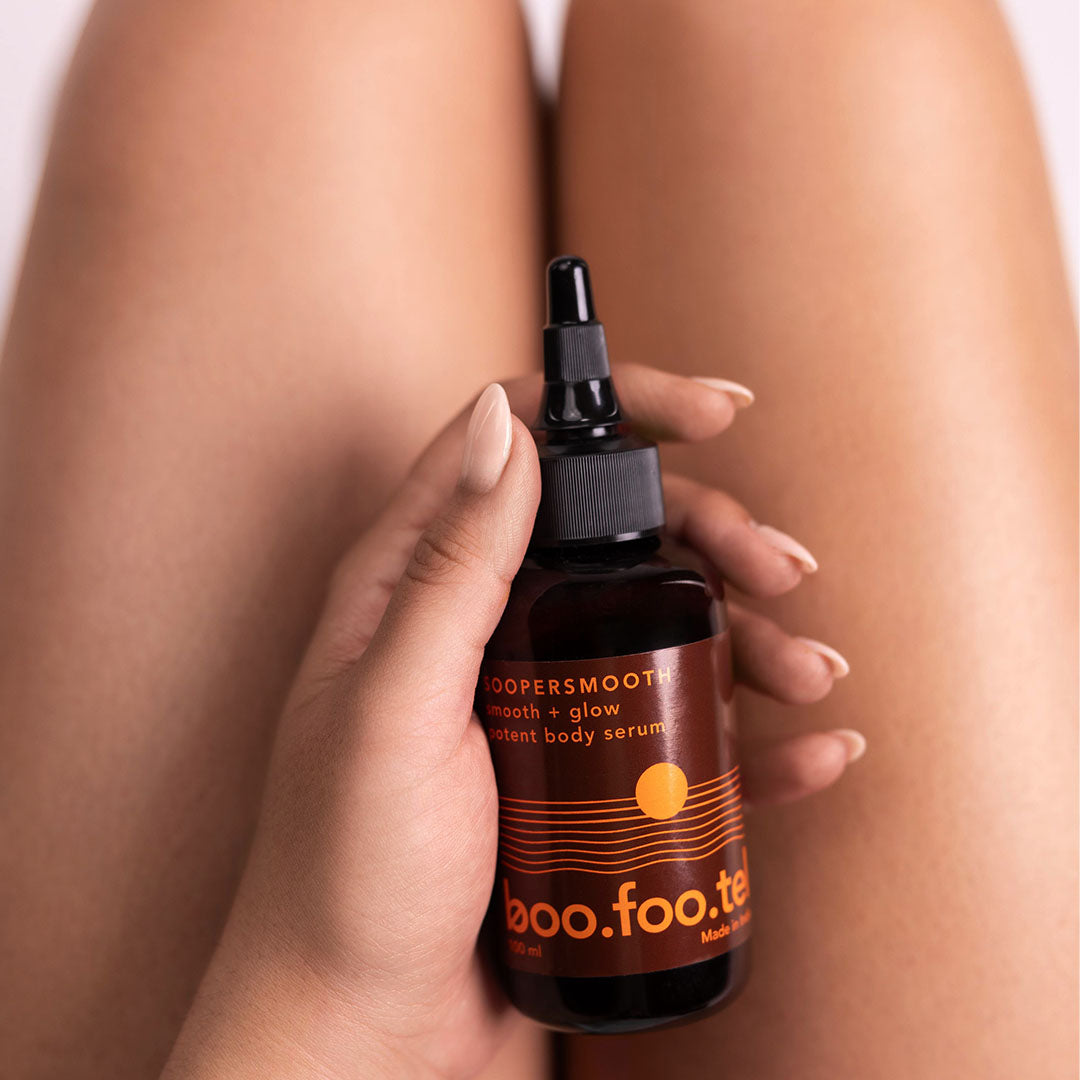
| Best serum for dark inner thighs: Boofootel Soopersmooth |
| Do's and Don'ts |
| When to see a dermatologist |
| Key Takeaways |
| FAQs |

Why Inner Thighs Get Dark
Spare a thought for your inner thighs. They rub together with every step, spend the day under skinny jeans and gym leggings, sweat through a 35-degree monsoon commute, and still get waxed on schedule. To your skin, each of those is a tiny injury. And skin's favourite response to injury? Melanin.
Dermatologists have a name for it: post-inflammatory hyperpigmentation (PIH), the darkening that lingers after irritation. It loves places where skin meets skin, like the underarms and inner thighs, and it tends to stick around for as long as the friction does [1]. Deeper skin tones get it more often and more intensely, which is exactly why it feels so familiar across India [2].
The usual suspects:
• Chafing from walking, running, cycling, or simply having thighs that touch (most do, and that's fine)
• Tight, synthetic fabrics that trap heat and rub all day
• Hair removal: wax, razors and hair removal creams all irritate, and healing ingrown hairs leave tiny dark dots, the same thing behind strawberry skin
• Sweat and humidity, which soften the skin and make friction work harder
• Hormonal shifts, from PCOS and pregnancy to weight changes
Then there's buildup. Dead skin, sweat and product residue settle into the fold, making the area look duller and rougher than it really is.
Flat or Velvety? The 10-Second Check
Before you buy anything, run your fingertips over the darker skin. It tells you more than any mirror.
Flat and smooth, just a shade deeper than the skin around it? That's almost certainly friction pigmentation, and everything below is for you.
Thicker, slightly raised or velvety, maybe on your neck or underarms too? That could be acanthosis nigricans, which is commonly linked to insulin resistance, obesity, PCOS and type 2 diabetes [3]. No cream can reach the root cause here. A doctor can check your blood sugar and insulin, and the skin usually softens once that's treated.

The Ingredients That Treat Dark Inner Thighs
Inner thigh pigmentation is a layered situation: surface buildup on top, pigment already sitting in the skin, and new pigment still being made. No single ingredient handles all three, which is why a well-built, multi-active formula almost always beats one hero ingredient.
Glycolic acid: the resurfacer. The smallest alpha-hydroxy acid (AHA), glycolic loosens the glue between dull, pigmented surface cells so they shed evenly instead of piling up. It's also one of the most studied ingredients for pigmentation on Indian skin [4].
Lactic acid: the gentler resurfacer. Glycolic's softer-spoken sibling. A slightly larger AHA, it exfoliates more slowly and hydrates as it works, which is exactly what a sensitive fold wants. It's shown real benefit against pigmentation in clinical studies [5].
Niacinamide: the pigment interrupter. Niacinamide slows how much pigment travels from your melanin-making cells up to the surface [6]. Better still, it's been tested on body-fold pigmentation specifically: in a randomised, placebo-controlled trial, 4% niacinamide lightened underarm darkness over nine weeks [7].
Vitamin C: the brightener. L-ascorbic acid puts the brakes on tyrosinase, a key enzyme in melanin production, and as an antioxidant it helps quiet the inflammation that kicks the whole cycle off [8].
Potassium azeloyl diglycinate: the quiet overachiever. You won't see this one on many labels, which is a shame. It's a water-soluble form of azelaic acid, gentler and far easier to formulate than the original. Azelaic acid helps calm overactive pigment cells and soothes inflammation, and in a randomised controlled study, a formula pairing potassium azeloyl diglycinate with niacinamide improved stubborn pigmentation over eight weeks [9].
Hyaluronic acid: the comfort layer. Freshly exfoliated skin in a warm, rubbing fold needs weightless hydration to stay calm enough for nightly use. That's its whole job, and it does it beautifully.
Ingredient Comparison Table
|
Ingredient |
What it does |
Best for |
Speed |
|
Glycolic acid |
Sheds pigmented surface cells |
Dullness, rough texture, buildup |
Texture in 2–4 weeks, tone in 8–12 |
|
Lactic acid |
Gentle exfoliation plus hydration |
Sensitive or dry inner thighs |
Gradual |
|
Niacinamide |
Reduces pigment transfer to the surface |
New and existing pigmentation |
Visible in about 8–9 weeks |
|
Vitamin C |
Slows melanin production, antioxidant |
Existing dark patches |
Gradual |
|
Potassium azeloyl diglycinate |
Regulates pigment, calms inflammation |
Friction PIH, post-waxing marks |
Gradual |
|
Hyaluronic acid |
Hydrates without heaviness |
Keeping skin calm and consistent |
Immediate comfort |
What to Skip
The internet has a lot of opinions about dark inner thighs, and most of the "overnight" fixes make things worse. The logic is simple: more irritation means more pigment.
• Lemon, baking soda and toothpaste. Harsh pH and irritants on thin, sweaty skin. Expect redness first and, eventually, more darkening.
• Gritty scrubs, loofahs and pumice. Scrubbing is friction. Friction is what got you here.
• Bleach and "whitening" creams. The goal is even, calm skin, not a lighter shade. Harsh lightening products often irritate their way into more pigment.
• Steroid creams and "triple combination" creams without a prescription. This is a big one in India. Topical steroid misuse is well documented here, often from creams picked up over the counter or on a friend's recommendation, and it can thin the skin, cause stretch marks and trigger rebound darkening [10].
• Hydroquinone you didn't get from a doctor. Since April 2019, hydroquinone products in India have been prescription-only under Schedule H [11]. If your cream contains it and nobody wrote you a prescription, put it down.
How to Treat Dark Inner Thighs: A Routine That Works
1. Cleanse gently. A mild body wash, no scrubbing. Then pat completely dry, because actives sting on damp skin in a fold.
2. Treat in the evening. Smooth a thin layer of an exfoliating, brightening serum over the darker area. Go every other night for the first two weeks, then nightly.
3. Let it sink in. Give it a minute or two before you get dressed, and sleep in breathable cotton.
4. Cut the friction by day. An anti-chafe balm, or cotton cycling shorts under dresses and kurtas, makes a real difference on long walking days.
5. Be patient (we mean it). Texture usually smooths within a few weeks, with a visible shift in tone at 8 to 12 weeks. As long as the friction continues, so should you.
One rule worth repeating: keep actives away from the bikini line and genital skin, and take the night off after waxing or shaving, or whenever the skin is broken or chafed raw.